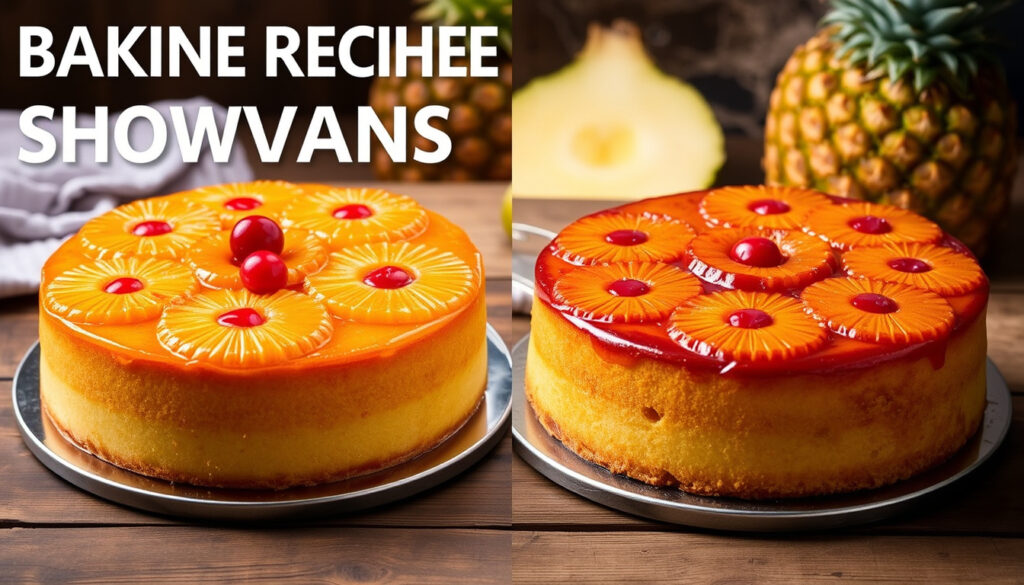
Pineapple Upside Down Cake Recipe: Mary Berry vs Jamie Oliver
There’s something quietly magical about flipping a cake pan and watching a glossy cascade of caramelized fruit emerge. Pineapple upside down cake has that theatrical moment built into its very name — and it’s why home bakers keep coming back, generation after generation. This guide compares two celebrated takes on the classic: Mary Berry’s British sponge version and Jamie Oliver’s tinned-fruit celebration.
Prep Time: 20 minutes · Cook Time: 45 minutes · Servings: 8-12 · Key Topping: Caramelized pineapple and cherries · Classic Style: Retro school dinner dessert
Quick snapshot
- Mary Berry uses 7 pineapple rings with all-in-one sponge method (Mary Berry Cooks)
- Jamie Oliver fries 12 pineapple rings in honey first (Jamie Oliver official)
- Both invert the cake warm to release the caramel (Mary Berry Cooks)
- Exact flour and egg quantities in Mary Berry’s sponge remain partially listed
- Jamie Oliver’s “Comfort Food” publication date is approximate (circa 2014)
- Blog post from October 2014 documents an old-fashioned variation featuring coconut and ginger (Julia H Life)
- Both recipes invert while warm to ensure the caramel releases cleanly (Mary Berry Cooks)
- Bakers can customize with pecans, cinnamon, coconut, or rum (Mary Berry Cooks)
| Attribute | Mary Berry | Jamie Oliver | Old-Fashioned |
|---|---|---|---|
| Pineapple rings | 7 | 12 | 6-8 |
| Caramel method | Direct in tin | Pre-fried with honey | Brown sugar melt |
| Batter technique | All-in-one | Creamed butter-sugar | Standard creaming |
| Bake temp | 180°C (160°C fan) | 180°C/350°F/gas 4 | 350°F |
| Bake time | 30-35 minutes | 35-40 minutes | 35-50 minutes |
| Serves | 6 | 6-8 | 8-12 |
Mary Berry Pineapple Upside Down Cake
Mary Berry’s pineapple upside down cake is described as a “true classic” — a retro dessert comforting bakers today as it was decades ago (Mary Berry Cooks). Her version stands apart through its foolproof approach.
Ingredients for Mary Berry version
Berry’s recipe uses 50g butter and 50g light brown sugar for the caramel topping, with 7 pineapple rings arranged with glacé cherries in the center (Mary Berry Cooks). Her sponge employs the all-in-one method — flour, baking powder, butter, sugar, eggs, milk, and pineapple juice combined in a single bowl for speed and reliability. The recipe recommends using tinned pineapple in juice, not syrup, to balance sweetness (Mary Berry Cooks).
Step-by-step baking instructions
The cake bakes at 180°C (160°C fan) / 350°F for 30-35 minutes (Mary Berry Cooks). Critical tips include patting pineapple dry to avoid excess moisture pooling in the batter, and using room-temperature ingredients for a smooth, even crumb. She also suggests adding pecans, cinnamon, coconut, lime zest, cocoa, or rum as optional customizations (Mary Berry Cooks).
The implication: Berry’s approach prioritizes simplicity and consistency, making it ideal for nervous bakers or those short on time.
Old Fashioned Pineapple Upside Down Cake
The old-fashioned style captures nostalgic charm with a soft butter cake base and caramelized pineapple topping — the same comforting combination that graced school dinner tables for generations.
Traditional ingredients and method
Traditional recipes use brown sugar melted with butter as the caramel base, spread across a well-greased 9-inch round tin before arranging pineapple rings. Maraschino cherries sit in the center of each ring. One variation from October 2014 experimented with coconut milk, ginger syrup, and lime zest alongside the classic formula (Julia H Life).
Tips for caramelized topping
For the perfect golden glaze, ensure brown sugar covers every inch of the pan bottom. Patience matters — resist lifting the pan before the sugar fully melts into a glossy coating. The cake base is typically yellow or vanilla, poured directly over the arranged fruit.
What this means: Traditional methods reward patience. Rushing the caramel step produces uneven coverage that shows in the final flip.
Pineapple Upside Down Cake Recipe Best Ever
Seeking the ultimate version means balancing moisture, caramelization, and presentation — all of which hinge on technique as much as ingredients.
Key steps for best results
The best versions feature a moist vanilla cake with golden pineapple that holds its shape after flipping. Key steps include greasing the pan meticulously, arranging rings in a symmetrical pattern, and spreading batter evenly to eliminate gaps where fruit might peek through the crust. One source notes that muffin tins work for mini versions — ideal for parties (Mary Berry Cooks).
Common mistakes to avoid
The most frequent failure is skipping the rest period before flipping. Without that 5-minute window, the caramel hasn’t set enough to cling to the fruit. Other pitfalls include using pineapple in syrup (which adds excess liquid) and failing to pat rings dry before arrangement.
The pattern: Technique failures — not ingredient problems — account for most disappointments. The recipe forgives imperfect measurements but not impatient timing.
Simple Pineapple Upside Down Cake
Beginner bakers needn’t fear this classic. The simple version strips away complexity without sacrificing the signature flip moment.
Quick ingredients list
Boxed cake mix forms the base — just add eggs, oil, and pineapple juice following package directions. The caramel topping stays unchanged: butter, brown sugar, pineapple rings, and cherries. This approach cuts prep time to under 20 minutes.
Easy no-fuss instructions
No creaming butter and sugar means fewer opportunities for error. Prepare the caramel in the pan, arrange fruit, pour batter, and bake. The result delivers the classic taste with a fraction of the effort.
Why this matters: Entry-level simplicity doesn’t mean entry-level flavor. Cake mix produces a reliably tender crumb that complements the caramelized topping.
Pineapple Upside Down Cake Jamie Oliver
Jamie Oliver’s version brings theatrical flair through a distinctive pre-caramelization step that adds depth most recipes miss.
Jamie Oliver’s unique twists
Oliver starts by caramelizing 12 pineapple rings in a frying pan with 1 tablespoon honey on medium-high heat for 4-5 minutes before assembling (Jamie Oliver official). His recipe — featured in “Comfort Food” — serves 6-8 people with a total time of 50-60 minutes. He embraces tinned fruit for “old-school flavour” and places a glacé cherry in each pineapple ring center. The batter uses 150g butter, 150g caster sugar, and 3 eggs, baked at 180°C/350°F/gas 4 for 35-40 minutes in a 30cm x 20cm roasting tray (Jamie Oliver Eats).
Serving suggestions
Oliver suggests serving with vanilla ice cream or cream — the cold contrast against warm caramel creates an indulgent experience (YouTube). His approach transforms a simple dessert into a centrepiece for afternoon tea.
The trade-off: Oliver’s method requires extra dishes and time, but the honey-kissed caramel justifies the effort for special occasions.
Mary Berry’s all-in-one method versus Jamie Oliver’s pre-fried pineapple represent two philosophies: simplicity versus depth. If you want a foolproof bake with minimal cleanup, follow Berry. If complex caramel notes excite you, invest the extra minutes with Oliver.
For beginners, Mary Berry’s approach wins on accessibility. For experienced bakers seeking a showstopper, Jamie Oliver’s honey-fried technique delivers memorable complexity worth trying at least once.
How to Bake Your Pineapple Upside Down Cake
Six steps separate you from that satisfying flip moment:
- Prepare the pan: Grease a 9-inch round tin thoroughly with butter, ensuring all corners are coated. Sprinkle light brown sugar evenly across the bottom.
- Arrange the fruit: Place pineapple rings in a circular pattern, centering a glacé cherry in each ring. Pat rings dry first to prevent moisture from seeping into the batter.
- Make the batter: Combine flour, baking powder, butter, sugar, eggs, milk, and pineapple juice using the all-in-one method, or cream butter and sugar first for a lighter texture.
- Pour and bake: Spread batter evenly over fruit. Bake at 180°C (350°F) for 35-50 minutes until golden and a skewer inserted in the cake (not fruit) comes out clean.
- Rest the cake: Allow 5 minutes cooling time in the pan — this lets the caramel set slightly for cleaner release.
- Flip and serve: Place a serving plate over the tin, invert confidently, and lift away. Serve immediately with custard, cream, or vanilla ice cream.
“A cracking upside-down cake. Embracing the beauty of tinned fruit, this version delivers big on old-school flavour.”
— Jamie Oliver, Jamie Oliver official website
“Mary Berry’s version is simple yet elegant — using the all-in-one method for a quick, foolproof batter and perfectly balanced sweetness.”
— Mary Berry Cooks
The retro appeal of pineapple upside down cake endures because it delivers guaranteed results with a built-in dramatic payoff. Whether you follow Mary Berry’s streamlined British approach or Jamie Oliver’s caramel-forward technique, the flipping moment rewards every baker with that unmistakable golden reveal.
Related reading: Real Fruit Bubble Tea Recipes
youtube.com, youtube.com, youtube.com, maryberrycakerecipes.com
This retro dessert shines in comparisons like the Mary Berry & Jamie recipe that highlights its caramel-glazed pineapple rings and cherries for dinner parties.
Frequently asked questions
Why does pineapple upside down cake get flipped?
The flip transforms the hidden caramel topping into a visible, glossy presentation. The brown sugar and butter create a golden glaze over the fruit during baking — but that glaze sits face-down against the pan. Inverting reveals the beautiful caramel layer while placing the cake base underneath.
Can I substitute fresh pineapple?
Fresh pineapple works, though tinned in juice is preferred for consistent moisture content and easier caramelization. If using fresh, slice into rings and briefly sauté in a pan to remove excess water before arranging in the tin.
How to prevent sticking when flipping?
Thorough greasing with butter is essential, plus ensuring the caramel has fully melted and coated the pan. Let the cake rest for 5 minutes after removing from the oven, then run a knife around the edges before inverting. Confidence matters — hesitate at the crucial moment and the caramel may stick.
What if I don’t have maraschino cherries?
Glacé cherries make an ideal substitute — in fact, many UK recipes call for them by name. Alternatively, skip them entirely, use fresh cherries, dried cranberries, or place a walnut half in each ring center for visual contrast.
Is pineapple upside down cake dairy free?
Traditional recipes use butter throughout, but you can substitute dairy-free margarine or coconut oil for the caramel and cake batter. Replace milk with plant-based alternatives and verify cake mix ingredients if using a boxed version.
How to store leftovers?
Cover tightly and store at room temperature for up to 2 days, or refrigerate for up to 5 days. The caramel topping may soften in the fridge, so brief reheating restores that just-flipped texture.
Can I make it in a bundt pan?
A bundt pan works well for larger gatherings and makes an impressive centrepiece. Adjust baking time upward for the thicker centre, and ensure thorough greasing — the intricate grooves make removal trickier than a standard round tin.
More related posts
 Audrey Hobert: Age, Father, Friends, and Is She a Nepo Baby
 Euro to Canadian Dollar – Current Rate and Trends
 Costco Return Policy Canada: Times, Exceptions & How-To
 Julian Lennon: Life, Family, and His Father’s Legacy
 16000 USD to CAD – Live Rates, Trends and Transfer Tips
 Time in the UK Now: BST/GMT, London & Clock Changes
 Alexander Ovechkin: Stats, Records, and Gretzky Chase
 Major Mohit Sharma: Biography, Family, Dhurandhar Controversy