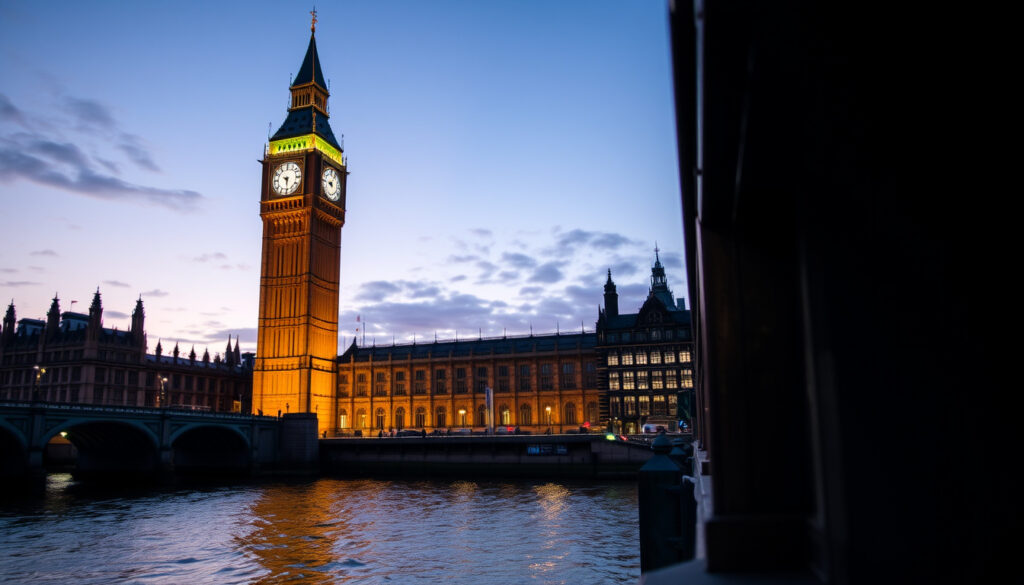
Time in the UK Now: BST/GMT, London & Clock Changes
The UK and Republic of Ireland currently share the same time—British Summer Time (BST/IST, UTC+1)—despite different legal frameworks governing their clocks. This synchronized arrangement has held since 1971, meaning Dublin and London show identical numbers on their clocks for the entire year, with the only variation being the labels: BST versus IST.
Main Time Zone: GMT/BST (UTC+0/+1) · DST Period: Last Sunday March to Last Sunday October · UK Cities on BST: London, Edinburgh, Belfast, Cardiff · Time Zones Count: 1 mainland (GMT/BST) · Ireland Offset: Same as UK during winter; BST vs IST
Quick snapshot
- Exact time status for overseas territories (Falklands, Gibraltar)
- Whether ongoing EU discussions on abolishing clock changes affect UK planning post-Brexit
The table below outlines the key technical specifications for UK and Irish time zones, showing how the two jurisdictions maintain synchronized clocks despite separate legislation.
| Label | Value |
|---|---|
| Standard Time | Greenwich Mean Time (GMT) |
| Daylight Time | British Summer Time (BST) |
| UTC Offset Winter | UTC+0 |
| UTC Offset Summer | UTC+1 |
| DST Start | Last Sunday in March |
| DST End | Last Sunday in October |
| London Population | 7,557,000 |
| Major BST Cities | Birmingham, Glasgow, Liverpool |
What time is it in the UK just now?
Right now, the UK is operating under British Summer Time (BST), which means the clocks are one hour ahead of Greenwich Mean Time. That puts the UK at UTC+1. If you’re reading this during BST season—roughly April through late October—you’re seeing the same time whether you’re in London, Edinburgh, Belfast, or Cardiff.
London is the largest city in this time zone, home to approximately 7,557,000 people (Savvy Time World Clock). The entire English, Scottish, Welsh, and Northern Irish mainland shares this single time zone, which is unusual globally: most countries of comparable size split across multiple offsets.
“Britain is one of only a handful of countries that shifts time twice annually as a matter of national policy rather than regional variation.”
— Wikipedia, British Summer Time
London time
- Current offset: UTC+1 (British Summer Time)
- Winter offset: UTC+0 (Greenwich Mean Time)
- Time format: 12-hour clock (AM/PM) or 24-hour format
Current time across UK cities
Birmingham, Glasgow, Liverpool, Manchester, Sheffield, Leeds, Newcastle, Bristol, Cardiff, and Edinburgh all share the same time during BST. The only exceptions are the Crown Dependencies—Jersey, Guernsey, and the Isle of Man—which follow BST but may observe minute differences based on local legislation (Savvy Time World Clock).
British Summer Time runs from the last Sunday in March at 01:00 GMT until the last Sunday in October at 02:00 BST (Wikipedia — British Summer Time). The transition is fixed by the Summer Time Order 2002, so there are no surprises—just plan for that Sunday morning when you lose or gain an hour of sleep.
What is the UK time zone?
The UK uses two official time designations depending on the season. During winter, the country operates on Greenwich Mean Time (GMT, UTC+0). During summer, British Summer Time (BST, UTC+1) takes over, moving the civil time forward one hour.
This dual-zone system is defined by the Summer Time Order 2002, which legally establishes when the transition occurs. The UK is one of only a handful of countries that shifts time twice annually as a matter of national policy rather than regional variation (Wikipedia — British Summer Time).
GMT vs BST
GMT is the original reference time zone—the one from which every other zone is measured. “Greenwich Mean Time” comes from the Royal Observatory in Greenwich, London, which has been the world standard since 1884. BST isn’t a separate time zone but a seasonal modification of GMT.
The shift from GMT to BST means mornings have one hour less daylight, and evenings one hour more (Wikipedia — British Summer Time). The trade-off is debated annually: some prefer the lighter evenings for leisure, while others argue the darker mornings affect health and productivity.
Time in major cities
Every major UK city—London, Birmingham, Glasgow, Liverpool, Manchester, Newcastle, Sheffield, Leeds, Bristol, Cardiff, Edinburgh—follows the same clock. There’s no “Central UK Time” or regional offset within the mainland. The entire England, Scotland, and Wales share one synchronized time source.
Northern Ireland also follows BST, which means Belfast runs on the same time as Dublin during summer. This wasn’t always the case historically, but since 1971, the two jurisdictions have maintained synchronized transitions.
Is Ireland 1 hour ahead of the UK?
No. Ireland is not permanently one hour ahead of the UK. The two territories share the same time for most of the year, with one notable exception: during British Summer Time, the Republic of Ireland runs on Irish Standard Time (IST), which is identical to BST—both are UTC+1.
The only period where times differ is when one jurisdiction shifts and the other hasn’t yet—or vice versa. Since 1997 and the alignment of EU clock change dates, this window has been minimized to just a few hours around transition Sundays (Wikipedia — British Summer Time).
“The instant of transition to and from daylight saving time is synchronised across Europe.”
— Wikipedia, Time in the Republic of Ireland
UK vs Ireland time difference
The relationship between UK and Irish time is legally distinct but practically identical. Ireland’s Standard Time Act 1968 established that standard time should be one hour ahead of GMT year-round, but the Standard Time (Amendment) Act 1971 created a winter exception, allowing GMT during the darker months (Wikipedia — Time in the Republic of Ireland).
The time on the island of Ireland is the same as that in Portugal and the United Kingdom, as well as during winter months, Iceland (Wikipedia — Time in the Republic of Ireland). Ireland operates one hour behind its statutory standard time during winter and reverts to standard time in summer.
Same time periods
From late October to late March, both the UK and Ireland use GMT/UTC+0. From late March to late October, both use BST/IST at UTC+1. The instant of transition to and from daylight saving time is synchronized across Europe (Wikipedia — Time in the Republic of Ireland).
Under EU law—which the UK retained alignment with after Brexit—the clocks in all member states change at the same time on the last Sunday in March and last Sunday in October (RTE). This means Dublin and London shift together, meaning the time difference between the two capitals is zero for the entire year.
The legal frameworks differ: the UK uses the Summer Time Order 2002, while Ireland uses its own Standard Time Acts. But the practical outcome is identical—same clocks, same transitions, same result for anyone living on either side of the border.
What is current UK time in GMT?
If you need to convert current UK time to GMT, you first need to determine which season you’re in. During winter (late October through late March), UK time is GMT. During summer (late March through late October), UK time is BST—meaning it’s one hour ahead of GMT.
BST is GMT+1. So if it’s 3:00 PM BST in London, it’s 2:00 PM GMT. Conversely, to convert GMT to current UK time: add one hour during BST, add zero hours during GMT.
Convert BST to GMT
- If the time is BST (summer): subtract 1 hour to get GMT
- If the time is GMT (winter): the time stays the same
- Example: 20:00 BST → 19:00 GMT
Current offset
Currently, British Summer Time is in effect, placing the UK at UTC+1. If you need to schedule a call with someone in a different time zone, remember that London is one hour ahead of UTC—but during winter months, it returns to UTC+0.
The shift happens at specific moments: BST begins at 01:00 GMT on the last Sunday in March and ends at 02:00 BST on the last Sunday in October (Wikipedia — British Summer Time). In 2026, those dates are March 29 and October 25 respectively.
UK time change
The UK clock change follows a predictable pattern tied to British Summer Time. Every year, clocks spring forward one hour on the last Sunday in March and fall back one hour on the last Sunday in October. This creates two distinct effects: in spring, you lose an hour of sleep; in autumn, you gain an hour.
British Summer Time was originally introduced in 1997 via Directive 97/44/EC of the European Parliament requiring European countries to implement a common summer time (Wikipedia — British Summer Time). The starting and finishing times of daylight saving were aligned across the European Union on October 22, 1995, and this alignment has persisted even after Brexit.
Clocks change dates
For 2026, the clock change dates are fixed. BST began on Sunday, March 29, 2026 at 1:00 am GMT when clocks moved forward one hour (GOV.UK). BST will end on Sunday, October 25, 2026 at 2:00 am BST when clocks move back one hour, returning to GMT (GOV.UK).
In Ireland, clocks “spring forward” by one hour at 1am on the last Sunday of March (29 March 2026), and “fall back” an hour at 2am on the last Sunday of October (25 October 2026) (RTE). The transition is synchronized: Dublin shifts at the same moment London does.
Sleep impact
When clocks spring forward in March, you lose one hour of sleep. For example, if you normally go to bed at 11:00 PM, after the change your body will think it’s 10:00 PM—meaning you’re effectively losing 60 minutes of rest. This can affect alertness, mood, and productivity for several days afterward.
When clocks fall back in October, you gain an hour—so Sunday becomes a 25-hour day. This is generally welcomed for recovery, though some people experience “Sunday insomnia” before the change, knowing they’ll feel more tired Monday morning.
The synchronized EU-wide clock change means the UK, Ireland, and continental Europe shift together. For anyone coordinating across time zones—from business calls to family visits—the alignment minimizes confusion. But it also means the UK hasn’t adopted the EU’s ongoing discussion about potentially abolishing clock changes, which could create future divergence.
The implication for businesses is clear: scheduling software and international calls should automatically adjust for BST versus GMT, but anyone relying on manual updates will need to account for the October 25 transition when London reverts to UTC+0.
The following comparison shows how the two jurisdictions align despite different legal foundations, making cross-border coordination straightforward for residents and visitors alike.
| Aspect | United Kingdom | Republic of Ireland |
|---|---|---|
| Winter Time | GMT (UTC+0) | GMT (UTC+0) |
| Summer Time | BST (UTC+1) | IST (UTC+1) |
| Legal Framework | Summer Time Order 2002 | Standard Time Acts 1968, 1971 |
| Transition Start | 01:00 GMT, last Sunday March | 01:00 GMT, last Sunday March |
| Transition End | 02:00 BST, last Sunday October | 02:00 IST, last Sunday October |
| Synchronized? | Yes | Yes (with UK) |
| Border with EU | None (post-Brexit) | Land border with Northern Ireland (UK) |
Two jurisdictions, one island, no time difference: the UK and Ireland maintain synchronized clock changes despite different legal foundations. The UK relies on the Summer Time Order 2002; Ireland operates under its Standard Time Acts from 1968 and 1971 (Wikipedia — Time in the Republic of Ireland). But both follow the same EU-aligned schedule—last Sunday in March for spring forward, last Sunday in October for fall back.
Timeline of UK and Ireland clock changes
- Last Sunday March 29, 2026 (01:00 GMT): Clocks forward one hour — BST begins in the UK, IST begins in Ireland. Both jurisdictions shift simultaneously, maintaining zero time difference (GOV.UK).
- Last Sunday October 25, 2026 (02:00 BST/IST): Clocks back one hour — GMT resumes in the UK, GMT resumes in the Republic of Ireland. The seasonal cycle completes with synchronized transitions (GOV.UK).
The pattern repeats annually: spring forward, summer of longer evenings, autumn back. The alignment between London and Dublin means anyone traveling across the border experiences no jet lag-style adjustment—the clocks move together, and the time remains identical throughout the year.
In March 2026, the western Canadian province of British Columbia announced adoption of year-round daylight saving time, with the clock change on March 8, 2026 being the last (RTE). This creates an interesting contrast: while North American jurisdictions debate permanent DST, the UK and Ireland continue the twice-yearly transition. Whether post-Brexit Britain eventually considers similar changes remains an open question.
Confirmed vs. Unclear
Confirmed
- UK mainland uses single time zone (GMT/BST)
- DST dates fixed by law (Summer Time Order 2002)
- UK-Ireland time synchronized since 1971 alignment
- Both jurisdictions shift simultaneously
- Current offset: UTC+1 (BST)
Unclear
- Exact time status for overseas territories (Falklands, Gibraltar)
- Whether UK will follow EU if bloc abolishes clock changes
- Long-term political discussion on permanent BST adoption
The legal framework for UK clock changes is solid and well-documented. The Summer Time Order 2002 establishes fixed transition dates that don’t vary by year. However, the ongoing EU debate about potentially ending seasonal clock changes creates uncertainty about future alignment. The UK retained EU clock change alignment after Brexit, but whether it would follow a continental decision to standardize remains undecided.
For travelers, businesses, and anyone coordinating across the Irish Sea, the practical takeaway is clear: London and Dublin share the same time for the entire year. The only variation is the label—BST versus GMT on the UK side, IST versus GMT on the Irish side—but the numbers on the clock are identical.
Related reading: Victoria Day 2025 date · How many weeks left in 2025
zeitverschiebung.net, en.wikipedia.org, ireland.com, savvytime.com, worldometers.info
Consulting a live UK clock guide helps verify GMT/BST shifts alongside London specifics and Ireland time comparisons.
Frequently asked questions
What is the current time in London, UK?
London is currently on British Summer Time (BST, UTC+1), running one hour ahead of Greenwich Mean Time. This will remain until clocks fall back on October 25, 2026, returning the city to GMT (UTC+0).
How many time zones does the UK have?
The UK mainland has one time zone. However, the UK operates two designations: Greenwich Mean Time (winter) and British Summer Time (summer). The Crown Dependencies—Jersey, Guernsey, and Isle of Man—follow BST/GMT but may have minor legislative variations.
When do clocks change in Ireland?
Ireland follows the same schedule as the UK: clocks spring forward on the last Sunday in March (29 March 2026) and fall back on the last Sunday in October (25 October 2026). Dublin and London shift simultaneously.
Do we lose or gain an hour of sleep in October, UK?
In October, you gain an hour of sleep. Clocks fall back one hour on the last Sunday in October, creating a 25-hour day instead of the usual 24. In March, you lose an hour—the opposite effect.
What is British Summer Time?
British Summer Time (BST) is the UK’s seasonal time designation, running from the last Sunday in March at 01:00 GMT until the last Sunday in October at 02:00 BST. During BST, civil time is advanced one hour forward of GMT, placing the UK at UTC+1.
Is Ireland 1 hour ahead of the UK?
No. Ireland is not permanently one hour ahead. During summer, both use UTC+1 (IST and BST respectively). During winter, both use UTC+0 (GMT). The time difference between Dublin and London is zero year-round.
What is the difference between BST and GMT?
GMT is the standard winter time (UTC+0), named after the Royal Observatory in Greenwich. BST is GMT plus one hour (UTC+1), used during summer months for longer evening daylight. BST isn’t a separate time zone but a seasonal modification.
For anyone scheduling calls, travel, or family visits across the Irish Sea, the bottom line is simple: London and Dublin are always on the same time. The labels differ—BST versus IST, GMT versus GMT—but the numbers on the clock never diverge. The next transition comes October 25, 2026, when both jurisdictions fall back to Greenwich Mean Time together.
More related posts
 Cast of The Morning Show: Full Season 4 Lineup & Departures
 Toronto Snow Squall Warning – Current Status and Safety Guide
 What Is the Longest Word in English? 45-Letter Giant Explained
 Best Pizza in Calgary: Top Pizzerias & Local Favorites
 Nat King Cole: Controversy, Last Words, Sinatra Friendship
 Rama Duwaji: Syrian-American Illustrator and NYC First Lady
 Shalom Harlow: Anti-Supermodel’s Life, Health & Legacy
 Dannielynn Birkhead: Life, Inheritance, and Paternity Case Facts