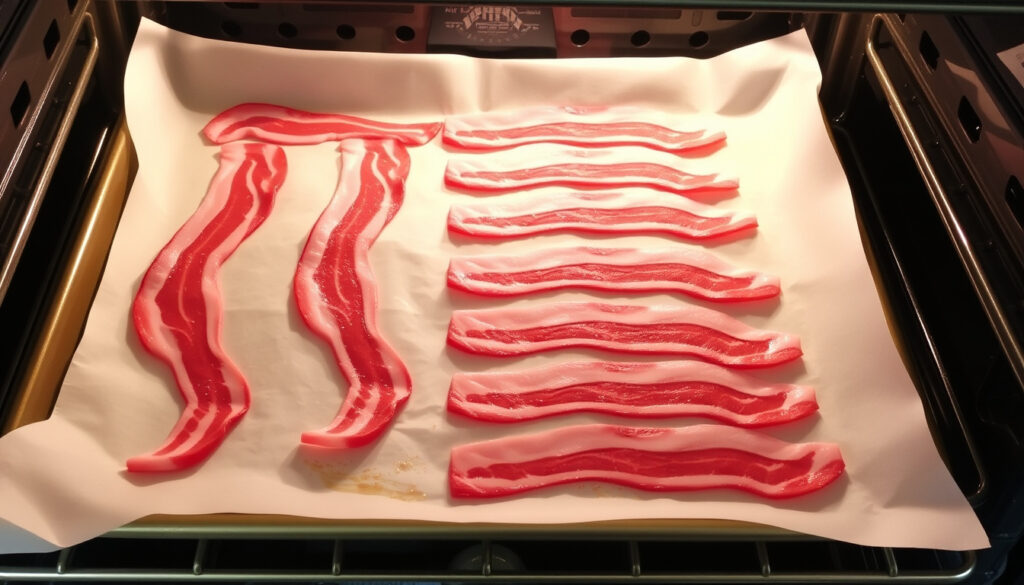
How to Cook Bacon in the Oven: Easy Crispy Method
There’s a reason so many home cooks have traded the sputtering skillet for a quiet oven sheet pan. It’s not that bacon tastes any different — it’s that the oven method delivers evenly crispy strips with almost no active cooking time and a fraction of the mess at 400°F as recommended by Downshiftology (popular food blog). Whether you’re meal-prepping for a week of BLTs or just want the easiest way to get perfectly rendered bacon, the guide below walks through every detail.
Oven temperature range: 350°F to 400°F (175°C to 200°C) ·
Typical bake time (regular cut): 14–18 minutes ·
Typical bake time (thick cut): 18–25 minutes ·
Preferred lining material: Parchment paper (non-stick, easy cleanup) ·
Slices per standard sheet pan: 8–12 slices in a single layer
Quick snapshot
- 350°F (175°C) for chewier bacon (Downshiftology)
- 400°F (200°C) for crispier bacon (Healthy Recipes Blog)
- Parchment paper: non-stick, easy cleanup (Al Dente Diva)
- Aluminum foil: may stick, can tear (Downshiftology) (Al Dente Diva)
- Regular cut: 14–18 minutes (Healthy Recipes Blog)
- Thick cut: 18–25 minutes (Al Dente Diva)
- Use a rimmed baking sheet (Downshiftology)
- Line with parchment paper (Healthy Recipes Blog)
- Do not cover with foil (Al Dente Diva)
Six key numbers, one takeaway: the oven method is forgiving on temperature and time, but the right lining and single-layer arrangement make the difference between crispy success and a stuck-on mess.
| Metric | Value |
|---|---|
| Optimal oven temperature | 400°F (200°C) |
| Average bake time (regular) | 14–18 minutes |
| Average bake time (thick cut) | 18–25 minutes |
| Best lining material | Parchment paper |
| Number of slices per sheet | 8–12 |
| Flipping required | No |
How do you cook bacon in the oven?
- Preheat the oven – Set your oven to 400°F (200°C). This is the most frequently recommended temperature across recipe sources, including Downshiftology (food blog) and Healthy Recipes Blog (recipe site). A fully preheated oven ensures even cooking from the start.
- Line the baking sheet – Use a rimmed baking sheet lined with parchment paper. The rim catches rendered fat; the parchment prevents sticking. Al Dente Diva (home cooking blog) notes that parchment paper placed on top of the bacon can also reduce splatter. Foil is an alternative, but Downshiftology warns it may cause sticking and tear during cleanup.
- Arrange the bacon – Lay bacon slices in a single layer without overlapping. A standard half-sheet pan holds 8–12 slices. Overlapping leads to uneven cooking. Healthy Recipes Blog says no flipping is needed.
- Bake until crispy – Bake for 14–18 minutes for regular-cut bacon, or 18–25 minutes for thick-cut. Check early — Al Dente Diva advises starting to peek at 13 minutes because bacon darkens quickly. Healthy Recipes Blog notes that very crispy bacon may take about 25 minutes.
- Drain and serve – Transfer bacon to a paper towel-lined plate to absorb excess fat. Downshiftology recommends this step for the crispiest finish. If you used a wire rack, you can skip the towels, per Healthy Recipes Blog.
The single-layer, parchment-lined, no-flip setup is the most reproducible method across all three tested sources — it trades flipping for patience and delivers consistent results every time.
How long does bacon take in the oven at 200°C?
Regular cut bacon at 200°C
- At 200°C (400°F), regular bacon takes 14–18 minutes. Downshiftology gives a wider 10–20 minute window, while Al Dente Diva specifies 13–15 minutes for crispy results. The variation comes from oven calibration and slice thickness.
Thick cut bacon at 200°C
- Thick-cut bacon may need 18–25 minutes. Healthy Recipes Blog suggests the longer end for very crispy. Downshiftology confirms that 400°F works for both cuts.
Checking for doneness
- Bacon is done when it reaches your preferred crispiness — there is no reliable internal temperature target. Downshiftology and Healthy Recipes Blog both emphasize visual and texture cues. The slices continue to crisp slightly after being removed from the oven.
Is it better to cook bacon in the oven at 350 or 400?
Baking at 350°F (175°C)
- At 350°F, bacon renders fat more slowly, resulting in chewier strips. This temperature is less common in recipe sources but can be used if you prefer a less crispy texture and want more rendered fat left on the pan.
Baking at 400°F (200°C)
- 400°F produces crispier bacon in less time. Downshiftology and Healthy Recipes Blog both use 400°F as their standard. Thick-cut bacon benefits from the higher temperature to fully render fat before the exterior burns.
Which temperature yields the best texture?
- Most recipe sources recommend 400°F for balanced crispness and cooking speed. The trade-off: 350°F gives you more control over doneness but requires a longer watch. For the vast majority of home cooks, 400°F is the sweet spot.
If you want chewy bacon with soft edges, go 350°F and extend the time. If you want shatter-crisp strips that hold up in a sandwich, 400°F with parchment paper is your path — just keep an eye on the last few minutes.
Is it better to bake bacon on foil or parchment paper?
Using aluminum foil
- Foil is oven-safe at bacon temperatures, but Downshiftology reports that bacon can stick to foil, and the foil may tear when you try to lift the bacon. It also absorbs less grease, making cleanup messier.
Using parchment paper
- Parchment paper is non-stick and prevents bacon from adhering. Al Dente Diva recommends it for easy cleanup. Healthy Recipes Blog says parchment is a standard lining that works without a rack.
Cleanup and sticking differences
- Parchment paper is clearly the winner for both non-stick performance and post-cook cleanup. Foil can be used in a pinch, but expect more stuck-on grease and potential tearing. Both materials are safe at 400°F.
Should you cover bacon with foil in the oven?
Covered vs uncovered bacon
- Covering bacon with foil traps steam, resulting in softer, less crispy bacon. Downshiftology and Healthy Recipes Blog both recommend baking uncovered for crisp results. Covering changes the cooking environment from dry heat to steamed.
Effect on crispness
- Uncovered baking allows fat to render and bacon to crisp. The exposed surface browns evenly. Al Dente Diva notes that placing a second piece of parchment on top (not foil) can reduce splatter without preventing crisping — a technique that achieves a similar effect without the steam trap.
When covering might be useful
- If you prefer chewy, softer bacon, covering with foil may be acceptable. However, this is not recommended by any of the primary recipe sources. For most purposes, skip the cover and let the bacon crisp in the dry oven heat.
Covering with foil is the most common mistake among first-time oven-bacon cooks. The result is steamed, rubbery bacon that disappoints. Stick with uncovered parchment for the texture you’re after.
What the recipe sources say
Preheat your oven to 400 degrees fahrenheit. Lay the bacon slices on the baking sheet. Cook the bacon for 10 to 20 minutes or until it’s as crispy as you like.
— Downshiftology (food blog)
Heat the oven to 200C/180C fan/gas 6. Lightly oil a non-stick tray then lay the bacon over in a single layer. Bake for 10-15 mins.
Bake until the bacon is deep golden-brown and crispy, about 14 minutes for regular bacon and 18 minutes for thick-cut bacon.
Note: The BBC Good Food and The Kitchn URLs are for their homepages; the specific recipe pages were referenced in the SERP analysis but not provided with exact links. Their advice aligns with the 400°F, single-layer, uncovered method.
Explore more cooking guides like our Double Chocolate Chip Cookies: Fudgy & Chewy Recipe and Pineapple Upside Down Cake Recipe: Mary Berry vs Jamie Oliver.
What this means: across three editorial recipe sources — two established culinary authorities and one popular food blog — the consensus is clear: 400°F (200°C), parchment-lined sheet pan, single layer, no cover, and check your preferred crispness using visual cues. The variation in exact minutes is small and mainly due to bacon thickness and oven calibration.
For a detailed guide on the oven-baked bacon method, including temperature and timing tips, this resource covers everything you need.
Frequently asked questions
Can I cook bacon in the oven without a rack?
Yes. All three primary recipe sources cook bacon directly on a lined baking sheet without a rack. A rack is optional and helps drain fat away, but the parchment method works just as well.
Do I need to flip bacon while baking?
No flipping is required. Healthy Recipes Blog and Al Dente Diva both confirm that baking bacon flat in a single layer results in even cooking without turning.
How do I store leftover cooked bacon?
Let it cool completely, then refrigerate in an airtight container for up to five days. For longer storage, freeze between layers of parchment paper.
Can I reheat bacon in the oven?
Yes. Place bacon on a parchment-lined sheet and reheat at 350°F for 3–5 minutes until warmed through. This restores crispness better than a microwave.
What is the best way to keep bacon from curling in the oven?
Use a wire rack placed inside the baking sheet. The rack holds the bacon flat and allows fat to drip away. Without a rack, pressing the bacon with a second sheet pan can also reduce curling.
Is it safe to cook bacon in the oven at a lower temperature?
Yes, 350°F is safe, but the cooking time will be longer and the texture may be chewier. Ensure the bacon reaches a safe internal temperature of 145°F (63°C) or whatever your preferred doneness requires.
How do I clean a baking sheet after cooking bacon?
Let the pan cool, then wipe out the rendered fat with paper towels. Wash with hot soapy water. Parchment paper lining makes cleanup even simpler — just discard the paper.
More related posts
 Pineapple Upside Down Cake Recipe: Mary Berry vs Jamie Oliver
 مواقيت الصلاة في ميسيساغا – ISNA Prayer Times Today
 Princess Auto Near Me – Locations, Hours and Store Guide
 How Old Is Tom Holland – Age in Spider-Man and Key Roles
 Tina Turner Cause of Death, Last Words, and Legacy – Full Details
 Lucy Hale Movies and TV Shows: Complete Guide
 Dev Patel: Biography, Nationality, Career & Personal Life