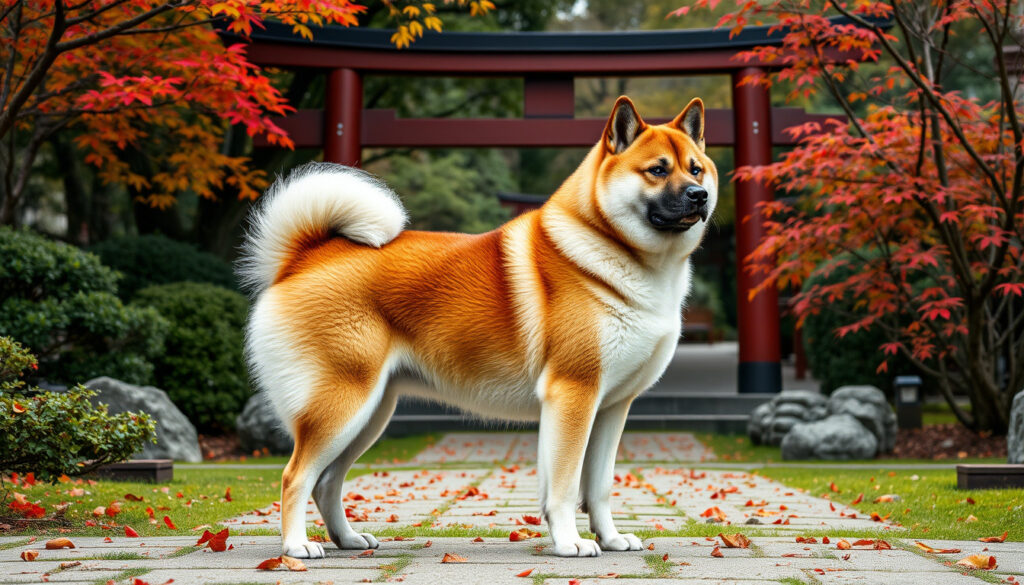
Akita Dog: Temperament, History, Breed Guide & Facts
There’s a reason the Akita has been revered in Japan for centuries — but also a reason it makes many banned-breed lists across the world. This guide pulls together official veterinary charity advice, breed club standards, and behavior data to help you decide if this powerful, loyal guardian is the right fit for your home.
Weight (male): 34–54 kg ·
Weight (female): 27–41 kg ·
Height (male): 66–71 cm ·
Height (female): 61–66 cm ·
Life expectancy: 10–13 years ·
Breed group (AKC): Working
Quick snapshot
- Akitas are large, loyal dogs bred for guarding and hunting (Akita Club of America)
- They can show aggression to other dogs, especially same-sex (Akita Club of America)
- Whether Akita aggression rates are higher than other guarding breeds (Akita Club of America)
- Exact bite incident counts compared to other large breeds (Akita Club of America)
- Whether breed-specific legislation coverage will continue to expand (Akita Club of America)
- 1931: Akita designated a Japanese natural monument
- 1972: American Kennel Club recognition
- Breed-specific legislation continues to be debated in parts of Europe
- Akita adoption rates may shift as awareness of training needs grows
The snapshot table below compiles the core physical and behavioral stats that define the Akita as a working breed.
| Attribute | Value |
|---|---|
| Weight Range | Male 34–54 kg, Female 27–41 kg |
| Height Range | Male 66–71 cm, Female 61–66 cm |
| Life Expectancy | 10–13 years |
| Temperament | Loyal, alert, dignified, fearless |
| Shedding | Heavy seasonal shedder |
| Good with Children | With older children and proper training |
How aggressive is an Akita?
Akita aggression is not random — it’s targeted. The breed’s guarding history means it discriminates between friend, stranger, and other dogs. For experienced owners who understand that map, the risk is manageable. For the unprepared, it’s a mismatch.
Akita temperament towards strangers
- Akitas are not typically aggressive toward people, but their guarding instinct makes them reserved with strangers (Akita Club of America (breed authority)).
- They signal visitors with a low rumble rather than barking (Akita Club of America).
- Hill’s Pet Nutrition (veterinary nutritionist) describes them as reserved with strangers, requiring firm leadership.
Six key traits, one pattern: the Akita treats unknown people with suspicion, not savagery — but that suspicion becomes dangerous if the owner cannot control a 40–50 kg dog.
Akita aggression towards other dogs
- According to the Akita Club of America (breed standard body), male Akitas show aggression toward other males, and females typically do not tolerate another female.
- Some Akitas can live peacefully with an opposite-sex dog, but many prefer being the only dog in the household (Akita Club of America).
- Akita Rescue UK (specialist rehoming charity) describes the Japanese Akita Inu as dominant over other dogs and not social with them.
The implication: this is a breed that genuinely dislikes four-legged company. Off-leash parks, daycare, and multi-dog homes are high-risk environments that demand expert management.
The pattern is consistent: targeted wariness toward strangers and active dominance toward other dogs define this breed’s social profile.
Is the Akita a good family dog?
Loyalty to family and safety around family are not the same thing. PDSA’s warning about accidental knocks from a 50 kg dog is one of the most practical — and overlooked — risks for families with toddlers.
Akita loyalty and bonding with family
- PDSA (UK veterinary charity) calls Akitas incredibly loyal family pets who are devoted to their owners.
- Hill’s Pet Nutrition (veterinary nutrition authority) notes they are deeply loyal, intelligent, and dignified with family members.
- PDSA advises that they do best with experienced owners in an active household.
Akita suitability with children
- PDSA would not recommend an Akita for homes with young children because its size and strength could accidentally knock them over (PDSA safety advice).
- Hill’s Pet Nutrition lists the breed as less suitable for families with young children without careful socialization.
- Akita Rescue UK says the Japanese Akita Inu is not the dog for every home and may be unsuitable for first-time dog owners.
The trade-off: an Akita gives intense, devoted loyalty to its core family — but that loyalty doesn’t translate into safety around small children or visiting friends. The breed’s size alone is a hazard for toddlers, regardless of intent.
Why are Akitas a restricted breed?
Breed-specific legislation and Akitas
- Akitas appear on restricted breed lists in several countries, including parts of the UK (under the Dangerous Dogs Act), Ireland, and some US municipalities.
- Restrictions typically require muzzling in public, mandatory insurance, and sometimes a ban on ownership outright.
- The rationale: bite statistics and incident reports from the late 20th century flagged Akitas alongside other guarding breeds as higher-risk.
Akita bite statistics and history
- Exact bite incident counts by breed are inconsistent across jurisdictions, but Akitas appear in multiple fatality databases (PDSA breed notes).
- The Akita Club of America states the breed should never roam free in neighborhoods — a warning other breeds do not typically need.
What this means: restriction is not a verdict on every Akita, but the breed’s combination of power, guarding instinct, and same-sex aggression has produced enough real incidents to justify caution among lawmakers.
Is an Akita dog a husky?
No — but the confusion is understandable. Both are spitz-type breeds with upright ears, thick coats, and northern ancestry. Three differences separate them clearly.
Akita vs Husky: physical differences
- Akitas are heavier and more powerful: males 34–54 kg vs Siberian Husky 20–27 kg.
- Akitas have a bear-like head; Huskies have a narrower fox-like face.
- Akitas come in red, white, brindle, and black; Huskies more commonly feature gray-and-white or black-and-white patterns.
Akita vs Husky: temperament differences
- Huskies are pack-oriented and generally friendly with strangers and other dogs; Akitas are guarded and selective (Akita Club of America).
- Huskies need high daily exercise; Akitas are less hyperactive but still require consistent activity.
- Akitas are independent and stubborn; Huskies are mischievous but more biddable.
The pattern: one is a working sled dog bred for endurance in a pack; the other is a guardian bred for independent decision-making. They look like cousins — they act like different species.
Why are Akitas banned?
Countries where Akitas are restricted or banned
- United Kingdom: Akitas are not outright banned but are subject to restrictions under the Dangerous Dogs Act 1991 in some areas, and many landlords and insurance policies exclude them.
- Ireland: Akitas are listed as a restricted breed requiring muzzling, leash, and special insurance.
- Malaysia, Bermuda, and some municipalities in the United States and Canada also restrict the breed.
Reasons behind Akita bans
- Bans are based on perceived aggression combined with the breed’s size and bite force — a 50 kg dog that guards can inflict serious injury.
- High-profile incidents from the 1980s and 1990s shaped public perception, despite incomplete data on breed-specific bite rates.
The implication: bans are less about the breed’s inherent nature and more about the damage a poorly trained large guarding dog can do. Responsible ownership in jurisdictions that allow the breed is critical to keeping those laws from expanding.
Breed overview: specifications
Four categories, one takeaway: this is a large, powerful working breed built for independence — not a lap dog or a beginner’s pet.
| Category | Details |
|---|---|
| Weight (male) | 34–54 kg |
| Weight (female) | 27–41 kg |
| Height (male) | 66–71 cm |
| Height (female) | 61–66 cm |
| Life expectancy | 10–13 years |
| Coat type | Dense double coat, heavy seasonal shedding |
| Colors | Red, white, brindle, black, sesame |
| AKC group | Working |
| Origin | Japan (17th–19th century, bear and boar hunting) |
| Recognition | AKC 1972; Japanese natural monument since 1931 |
The implication: every spec point reinforces that this breed was engineered for power and independence, not for casual ownership.
Pros and cons of owning an Akita
Upsides
- Extremely loyal and devoted to family (PDSA)
- Low barker — alerts via quiet rumble (Akita Club of America)
- Dignified, clean, and relatively calm indoors
- Excellent watchdog and property guardian
Downsides
- Prone to same-sex aggression — difficult in multi-dog homes (Akita Club of America)
- Not recommended for homes with young children (PDSA advice)
- High prey drive — unsafe off-leash around small animals (Akita Club of America)
- Heavy seasonal shedding — coat management required year-round
- Restricted in multiple countries — ownership complications for renters and travelers
The trade-off is clear: the Akita’s intense loyalty comes with a steep management requirement that not every household can meet.
What the experts say
Akitas are incredibly loyal family pets but they are very large, strong dogs who do best with experienced owners and an active household.
As a breed, Akitas are generally hardy and healthy dogs, but they have a high and well-developed prey drive and are not meant to roam the neighborhood unattended.
Akita Club of America (breed authority)
Akitas are best suited to experienced pet parents who understand their strong prey drive and occasional stubborn streak.
The breed’s history as a Japanese guardian and hunter has shaped every trait modern owners encounter. For the experienced handler who understands boundaries, socialization, and confinement, the Akita is a noble companion. For households that cannot provide that structure — especially those with children or other pets — the match is likely to fail.
For a UK family weighing the decision, the choice is clear: either commit to experienced training, secure containment, and a single-pet setup, or choose a breed better suited to typical family dynamics.
theakitalife.com, en.wikipedia.org, petplace.com, reddit.com, facebook.com, malcolmtheakita.com, theakitalife.com, reddit.com
For a detailed look at breed-specific regulations, see this Akita temperament and restrictions guide that covers restrictions and ownership considerations.
Frequently asked questions
Are Akitas good with other dogs?
Generally no. The Akita Club of America reports same-sex aggression is common, and many Akitas prefer to be the only dog. Opposite-sex pairs can sometimes coexist peacefully.
How much exercise does an Akita need?
At least 60 minutes of daily activity. They are less hyperactive than some working breeds but need structured walks, training, and mental stimulation to prevent behavioral issues.
Do Akitas shed a lot?
Yes — heavy seasonal shedding twice a year requires daily brushing. Outside shedding season, weekly grooming is sufficient.
Are Akitas easy to train?
They are intelligent but independent and stubborn. Hill’s Pet Nutrition recommends experienced handlers who can provide firm, consistent leadership.
How long do Akitas live?
10–13 years with proper care, which is typical for large breeds.
What is the difference between Japanese and American Akita?
The Japanese Akita Inu (recognized separately in the UK since 2006) is more reserved, quiet, and dominant over dogs. The American Akita is larger, heavier-boned, and more diverse in color. Temperament differences are subtle but recognized by breeders (Akita Rescue UK).
Can Akitas live in apartments?
Possible but not ideal. They need space to move and are heavy shedders. Apartment living requires rigorous daily exercise and careful management of their wariness toward neighbors.
More related posts
 Euro to Canadian Dollar – Current Rate and Trends
 How to Disable Notifications – Guide for All Devices
 Devils News: Luke Hughes Injury, Salaries, 2024 Update
 Cast of Black Bag (2025): Full Actors List & Roles
 Alaskan Malamute vs Husky: Key Differences in Temperament and Size
 Part Time Jobs Montreal: Pay, Livable Wage & High Demand (2026)
 Tom Blyth Biography: Age, Relationship, and Ethnicity
 Bar Stool Bar Ireland: Buying Guide & Best Retailers 2025