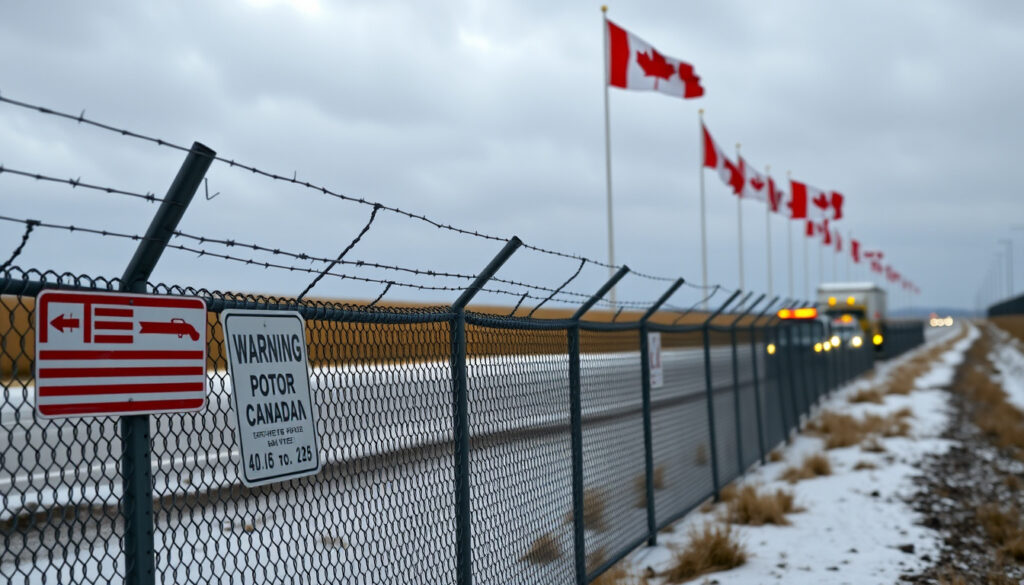
Canadian Woman Improper Entry Charge: Assault at US Border
When Lindsay Anne Moffatt arrived at the Canada-U.S. border on December 30, 2025, she wasn’t trying to smuggle contraband or flee authorities. She wanted her dog back. That seemingly simple errand—a pet handoff from her fiancé—ended with her facing federal charges after an altercation at Peace Arch State Park that injured a Border Patrol supervisor. The case has since exposed just how quickly routine cross-border travel can turn into a criminal matter, and how seriously U.S. authorities treat even minor violations of border integrity.
Accused Name: Lindsay Anne Moffatt ·
Nationality: Canadian ·
Charges: Assault on federal officer, improper entry ·
Incident Date: December 30, 2025 ·
Location: Blaine, Washington
Quick snapshot
- Exact motive beyond dog pickup (MyBellinghamNow)
- Final case outcome and potential sentencing (MyBellinghamNow)
- Defense attorney statements (MyBellinghamNow)
- Dec 30, 2025: Denied at port, then crossed illegally (KIRO7)
- Jan 1, 2026: Magistrate found probable cause (Ground News)
- Jan 2026: Court appearance scheduled (Economic Times)
- Case pending in U.S. District Court (KIRO7)
- Potential penalties under federal law (KIRO7)
- Impact on Canada-U.S. border travel for Canadians (KIRO7)
The table below consolidates the core facts established through court filings and media reports.
| Detail | Value |
|---|---|
| Full Name | Lindsay Anne Moffatt |
| Citizenship | Canada |
| Date of Incident | December 30, 2025 |
| Border Crossing | Peace Arch State Park, Blaine WA |
| Reported Motive | Picking up dog from fiancé |
| Initial Denial Point | Peace Arch Port of Entry |
| Federal Charges | Assault on federal officer, improper entry |
| Injured Officer | U.S. Border Patrol supervisor (female) |
What is the punishment for illegally entering Canada?
Before examining the U.S. side of this incident, it helps to understand what the rules look like from Canada’s perspective—since Moffatt, as a Canadian citizen, may eventually face consequences when returning home.
Penalties for improper entry
Under Canada’s Immigration and Refugee Protection Act, individuals who enter Canada without inspection face serious consequences. The Canada Border Services Agency (CBSA) has broad authority to enforce these rules, and even first-time violators can face fines, removal orders, or bans on future entry.
According to guidance from the Canada Border Services Agency, crossing outside designated ports of entry constitutes a violation that can result in immediate detention and processing for removal.
Criminal vs civil consequences
Canadian law distinguishes between civil immigration violations and criminal offences related to border crossing. A person who enters Canada without inspection faces civil penalties under immigration law, but those who aid or abet others in improper entry, or who use fraudulent documents, can face criminal charges under the Immigration and Refugee Protection Act.
The distinction matters for Canadians traveling south: while the U.S. charged Moffatt under federal criminal statutes, any Canadian who violates U.S. law may also trigger Canadian inadmissibility rules upon return, depending on the nature of the foreign conviction.
What happens if you accidentally enter Canada?
Border incidents can occur accidentally, particularly in areas like the Peace Arch where the boundary runs through parks and communities with shared spaces. Understanding what happens in these cases can prevent a minor mistake from becoming a major problem.
Immediate border response
According to U.S. Customs and Border Protection guidance, individuals who cross accidentally into either country are typically intercepted by the first available border patrol agent. The key factor in determining consequences is intent.
In Moffatt’s case, the FBI affidavit reportedly details infrared surveillance footage showing Moffatt walking around concrete barriers and crossing despite posted warnings reading “DO NOT CROSS – International Boundary” (KIRO7). This visual evidence undermines any claim of accidental crossing.
Resolution process
When crossing appears genuinely accidental, border officials typically issue warnings and escort the individual back across the boundary. No criminal charges result from unintentional violations where the person cooperates fully.
The situation differs sharply when, as in Moffatt’s case, agents describe the crossing as intentional and the response as combative. Multiple agents were reportedly required to handcuff Moffatt after she allegedly resisted arrest and had to be physically restrained on the ground (MyBellinghamNow).
Cooperation determines whether a border encounter stays administrative or escalates to criminal prosecution—Moffatt’s alleged resistance transformed a potential warning into federal charges.
What criminal charges disqualify you from entering Canada?
The Moffatt case raises a practical question for Canadians watching the proceedings: what happens if she’s convicted in U.S. federal court? Canadian law uses a concept called criminal inadmissibility to determine whether foreign convictions prevent entry to Canada.
Serious crimes list
Under Canadian immigration law, certain criminal offences make a person automatically inadmissible. These include any indictable offence (roughly equivalent to felonies in the U.S. system) and some summary offences depending on the sentence received.
Assault on a federal officer is a serious charge that would likely constitute an indictable offence under U.S. law. If convicted, Moffatt could face significant barriers to returning to Canada, even as a Canadian citizen. The CBSA’s criminal inadmissibility page explains that individuals may apply for rehabilitation after a waiting period, but the process requires demonstrating rehabilitation and takes several years.
Rehabilitation options
Canadians with foreign criminal records have two main paths: applying for individual rehabilitation (typically after five years post-sentence) or seeking a record suspension through the Canadian pardon process. However, serious convictions may require longer waiting periods or be deemed too severe for standard rehabilitation pathways.
For Moffatt, the timing matters. If she is acquitted, inadmissibility concerns vanish. A conviction could complicate her status as a Canadian who regularly crosses the border.
A U.S. conviction for assault on a federal officer could prevent Moffatt from freely crossing back into Canada—even though she is a Canadian citizen—until she completes the rehabilitation process.
What is the penalty for illegal entry into Canada?
While the U.S. side of this case has dominated headlines, Canadians should understand what improper entry looks like from the northern perspective as well, especially given cross-border enforcement patterns.
First-time offender outcomes
A person who enters Canada without inspection faces immediate processing by CBSA officers. For a first-time violator with no other immigration issues, the typical outcome is removal back to the United States with a warning and a notation in border screening systems.
However, those who are removed for improper entry may face longer admissibility reviews on subsequent attempts to enter Canada legally. Each interaction with border officials creates a record that can be referenced in future crossings. For a report, Lindsay Anne Moffatt faced charges after an incident at the US border, as detailed in this Història del Jack in the Box.
Repeat violations
Multiple violations escalate consequences significantly. According to the Immigration and Refugee Protection Act, individuals removed for non-compliance may face bars on re-entry ranging from one year to permanent inadmissibility, depending on the circumstances.
The pattern in border enforcement suggests that authorities take repeated violations seriously, particularly in areas where crossings have become frequent due to tourism or local traffic patterns.
What gets you denied entry to Canada?
Beyond criminal convictions, Canadian border officials assess several factors when determining whether to allow entry. Understanding these criteria can help Canadians avoid unexpected problems at the border.
Criminal inadmissibility
As discussed, any criminal record—U.S. or otherwise—can trigger inadmissibility proceedings. The key factors CBSA considers include the nature of the offence, the sentence imposed, and whether sufficient time has passed to demonstrate rehabilitation.
According to the CBSA guidance on criminal inadmissibility, both indictable and summary offences matter, but the threshold for summary offences typically requires that the maximum sentence was no more than six months and the actual sentence was less than six months.
Medical and security issues
Beyond criminal records, Canada denies entry based on medical inadmissibility (certain health conditions that may burden healthcare systems) and security concerns (including associations with terrorist organizations or espionage). These are less relevant to routine travelers but can complicate cases involving extended stays or immigration applications.
For most Canadians traveling to the U.S. and returning, criminal inadmissibility represents the primary risk if they face charges or convictions while abroad.
Timeline of the incident
| Moffatt attempted entry at Peace Arch Port of Entry but was denied after declaring a marijuana-related vape pen (KIRO7) | |
| Moffatt allegedly crossed illegally at Peace Arch State Park, bypassing barriers and posted warnings (KIRO7) | |
| Agents responded, Moffatt resisted arrest and allegedly struck a Border Patrol supervisor; arrested and detained (MyBellinghamNow) | |
| U.S. magistrate judge found probable cause for federal charges (Ground News) | |
| Court appearance scheduled; case filed in U.S. District Court (Economic Times) |
Confirmed facts
- Charges filed in U.S. District Court for assault on federal officer and improper entry (KIRO7)
- Incident occurred at Peace Arch State Park, Blaine WA (KIRO7)
- Woman identified as Canadian citizen (KIRO7)
- Injured officer was a female Border Patrol supervisor (Economic Times)
What remains unclear
- Exact motive beyond retrieving shared dog with fiancé (MyBellinghamNow)
- Final case outcome and potential sentencing
- Defense attorney statements or response
- Moffatt’s age, residence, or background
What witnesses and officials said
“F*** you.”
— Lindsay Anne Moffatt, during arrest, as reported in FBI affidavit (KIRO7)
Moffatt denied intentionally kicking anyone but said it was possible she struck an agent during the struggle.
— FBI investigators via affidavit (KIRO7)
Agents described Moffatt’s yelling as ‘hysterical’ as she resisted commands.
— MyBellinghamNow reporting (MyBellinghamNow)
Related reading: 16000 USD to CAD · 600 CAD to USD
Lindsay Anne Moffatt’s assault during her improper entry at Blaine echoes recent CBP agent confrontations at Peace Arch, highlighting tense border enforcement.
Frequently Asked Questions
What charges does the Canadian woman face?
Lindsay Anne Moffatt faces two federal charges: assault on a federal officer and improper entry into the United States. Both charges stem from the December 30, 2025 incident at Peace Arch State Park.
Where did the improper entry occur?
The improper entry occurred at Peace Arch State Park in Blaine, Washington—a buffer zone adjacent to the official Peace Arch Port of Entry. Moffatt had been denied entry at the port earlier that day after declaring a marijuana-related vape pen.
Why was the Canadian woman crossing the border?
According to reports, Moffatt crossed to meet her fiancé at the park and retrieve a dog they shared. This seemingly routine errand escalated after she bypassed concrete barriers and posted warnings.
What is improper entry under U.S. law?
Improper entry refers to entering the United States at any location other than a designated port of entry, or bypassing inspection by border officials. The charge carries penalties including fines and imprisonment.
How does this affect Canada-U.S. border travel for Canadians?
The case illustrates how quickly routine cross-border travel can result in federal charges. Canadians with U.S. assault convictions may face criminal inadmissibility issues when returning home, adding immigration consequences to any criminal sentence.
More related posts
 Double Chocolate Chip Cookies: Fudgy & Chewy Recipe
 What Is a Seed Round – Definition, Amounts and How It Works
 Benjamin Netanyahu: Tribe, Charges, Trump, Putin & Key Facts
 New Zealand vs Sri Lanka Match Scorecard: T20 WC Super 8s
 Courteney Cox: Biography, Relationships, Net Worth, and FAQs
 Bank of Canada Interest Rate Announcement: 2.25% Hold
 Harry Potter and the Order of the Phoenix: Summary, Cast & More
 Time in the UK Now: BST/GMT, London & Clock Changes