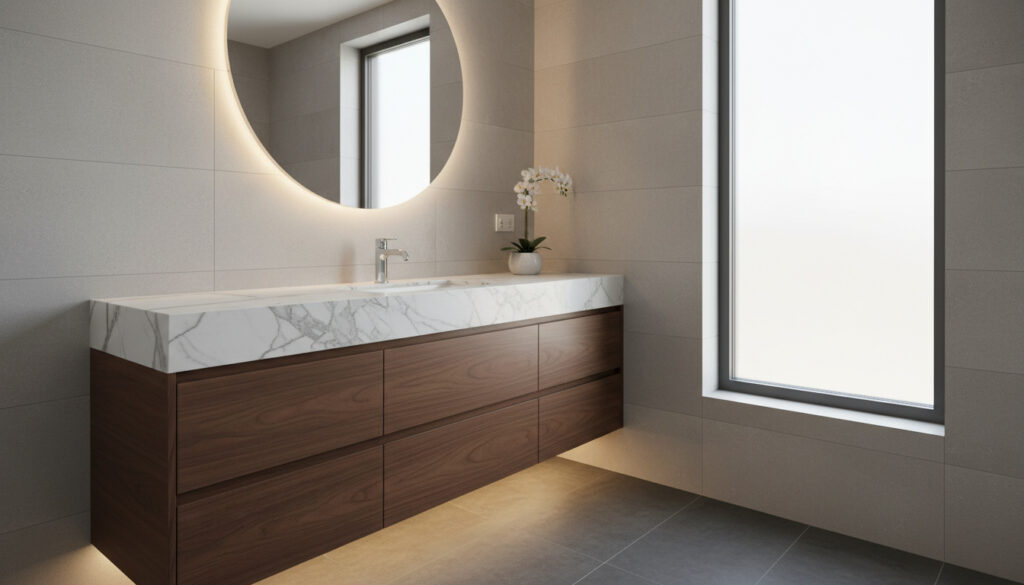
Bathroom Vanity with Sink – Sizes, Styles, Costs 2024
Bathroom vanities with sinks anchor both the functionality and aesthetics of modern bath spaces. In 2024, the market spans configurations from compact 24-inch single units to expansive 72-inch double-sink installations, with materials ranging from budget laminate to premium quartz and solid wood constructions. Prices currently stretch from under $500 for entry-level models to $1,500 and beyond for custom configurations featuring soft-close storage and stone countertops.
Major retailers including Lowes, IKEA, Home Depot, and Wayfair maintain extensive inventories catering to diverse spatial constraints and design preferences. Selection requires precise measurement of wall dimensions, door swing clearances, and plumbing alignment to ensure proper fit and operation.
This analysis examines dimensional standards, material durability, installation requirements, and cost structures based on current industry specifications and consumer feedback data.
What Size Bathroom Vanity with Sink Do I Need?
| Key Types | Popular Materials | Price Ranges | Top Dimensions |
|---|---|---|---|
| Single Sink (24–48″) Double Sink (60–72″) Floating Wall-Mount |
Quartz Solid Wood Marble Laminate |
Budget: $100–$500 Mid-Range: $500–$1,500 Premium: $1,500+ |
24″ (tight spaces) 36″ (balanced) 48″ (medium rooms) 60–72″ (shared) |
- Single sink vanities measuring 24 to 48 inches wide accommodate powder rooms and guest bathrooms efficiently.
- Double sink configurations demand 60 to 72 inches of wall space to prevent traffic conflicts during simultaneous use.
- Floating vanities require additional plumbing clearance and structural wall support beyond standard floor-mounted units.
- Door and drawer operation requires 24 to 30 inches of unobstructed floor space in front of the cabinet.
- Vessel sinks increase overall height by 6 to 8 inches, affecting mirror placement and faucet reach.
- Standard vanity depth measures 21 to 22 inches from wall to front edge.
| Specification | Measurement/Detail | Best Application |
|---|---|---|
| Single Sink Width | 24–48 inches | Small to medium bathrooms |
| Double Sink Width | 60–72 inches | Master or shared bathrooms |
| Standard Depth | 21–22 inches | General residential use |
| Vessel Height Addition | +6–8 inches | Designer installations |
| Clearance Requirement | 24–30 inches | Door/drawer operation |
| Floating Mount | Variable height | Modern, space-saving designs |
| Budget Price Point | $100–$500 | Laminate, basic fixtures |
| Mid-Range Price Point | $500–$1,500 | Solid wood, quartz tops |
| Premium Price Point | $1,500+ | Custom configurations |
| Installation Cost (Pro) | $200–$500 | Floating or complex plumbing |
| Soft-Close Drawers | Standard feature | High-quality units |
| Popular 2024 Size | 36 inches | Versatile storage balance |
What Materials and Styles Are Best for Bathroom Vanities with Sinks?
Countertop Durability and Maintenance
Quartz countertops currently dominate residential preferences due to non-porous surfaces that resist staining without sealant application. The material withstands scratching and requires only basic cleaning protocols. Marble offers visual elegance but demands regular sealant maintenance to prevent water damage and discoloration. Granite provides balanced durability and aesthetic variation, while laminate serves budget-conscious renovations under $500 despite reduced longevity and chip susceptibility.
Cabinetry Construction Quality
Solid wood construction supports rustic styling through natural finishes and shaker-style door profiles, contributing warmth to compact spaces. Engineered wood alternatives reduce costs while maintaining structural integrity for moderate-use bathrooms. High-quality units increasingly incorporate soft-close hinges and drawer slides as standard features, extending operational lifespan and reducing mechanical wear.
Design Style Categories
Modern vanities emphasize frameless mirror compatibility, undermount sinks, and sleek lines in neutral palettes of white and beige. These configurations suit contemporary renovations seeking minimalist aesthetics. Rustic designs incorporate natural wood grains and open shelving, creating character appropriate for traditionally styled spaces. Both categories require coordination with existing tilework, flooring, and fixture finishes to maintain visual cohesion.
Quartz countertops paired with undermount sinks offer the easiest maintenance routine, requiring only basic cleaning without special sealants or splash guards.
How to Install a Bathroom Vanity with Sink
DIY vs. Professional Requirements
Floor-mounted vanities with pre-drilled holes allow competent homeowners to complete installation independently when existing plumbing aligns with new fixture locations. However, floating vanities and custom stone countertops typically require professional contractors to ensure proper wall support and plumbing alignment. Professional installation adds between $200 and $500 to project costs for complex mounting scenarios.
Preparation and Measurement
Measure bathroom dimensions precisely, accounting for 24 to 30 inches of clearance in front of doors and drawers. Verify that sink depth accommodates the selected vanity type—vessel sinks require additional vertical space and specialized faucet heights. Check wall stud locations and load-bearing capacity before purchasing wall-mounted units, particularly when combined with heavy stone countertops. Canadian DIYers sourcing installation tools locally can check Princess Auto Near Me for equipment availability.
Plumbing Alignment
Align faucet holes with the selected sink configuration—options include single-hole, widespread, and centerset layouts. Ensure water supply lines reach new fixture locations without stretching. For quartz or granite tops, verify that the base cabinet supports the additional weight without sagging over time.
Floating vanities require checking wall stud locations and load-bearing capacity before purchase; improper mounting may result in catastrophic failure of both the vanity and plumbing connections.
How Much Does a Bathroom Vanity with Sink Cost?
Budget Tier ($100–$500)
Laminate countertops and single-sink configurations dominate this category. IKEA, Home Depot, Lowes, and Wayfair stock numerous options featuring engineered wood construction and basic hardware. These units suit guest bathrooms and powder rooms where use remains infrequent. Canadian buyers should note currency conversion rates when comparing international prices—approximately 600 CAD to USD conversions help establish accurate budgeting.
Mid-Range Tier ($500–$1,500)
Solid wood cabinetry and quartz countertops characterize this segment. Double-sink configurations become available, offering improved storage through soft-close drawers and divided compartments. This range represents the optimal balance of durability and aesthetics for most master bathroom renovations.
Premium and Strategic Purchasing
Custom stone tops, specialized vessel sinks, and bespoke sizing push costs beyond $1,500. Sales periods following holidays offer strategic purchasing opportunities for budget optimization. These configurations often require professional measurement and installation services.
The 36-inch solid wood shaker-style vanity with quartz top represents the most versatile mid-range investment, accommodating both small and medium bathroom layouts while providing storage longevity.
How Have Bathroom Vanity Trends Evolved in 2024?
- Storage Maximization: Double-sink vanities now emphasize divided storage solutions and organizational systems, responding to shared bathroom usage patterns.
- Matte Finish Adoption: Manufacturers shifted toward matte hardware and fixture finishes, moving away from high-gloss alternatives throughout 2024.
- Floating Vanity Growth: Wall-mounted units gained significant market share as homeowners seek modern aesthetics and simplified floor cleaning access.
- Soft-Close Standardization: What began as a premium feature has become standard across mid-range and higher units by late 2024.
- Quartz Market Dominance: Engineered stone surpassed natural marble in new installations due to maintenance concerns and durability requirements.
What Do We Know for Certain About Bathroom Vanity Specifications?
| Established Information | Information That Remains Unclear |
|---|---|
| Single sink widths range from 24 to 48 inches | Exact longevity comparisons between engineered and solid wood in high-humidity environments |
| Double sink configurations require 60 to 72 inches minimum | Universal weight limits for floating vanities across different wall constructions |
| Quartz countertops resist staining and require no sealant | Specific 2024 model recommendations from major consumer testing organizations |
| Vessel sinks add 6 to 8 inches to overall height | Regional variation in installation code requirements |
| Professional installation costs range from $200 to $500 for complex mounts | Comparative durability data for laminate vs. wood in rental properties |
Why Do Bathroom Vanity Specifications Matter for Home Value?
Bathroom renovations consistently rank among the highest return-on-investment home improvements. The vanity serves as both a functional workstation and a design anchor, influencing buyer perception during property evaluations. Incorrect sizing creates traffic flow problems and storage shortages, while material selections affect maintenance burdens for years following installation.
Current market analysis indicates that buyers prioritize move-in ready bathrooms with updated fixtures and durable surfaces. The difference between a laminate countertop requiring replacement within five years and a quartz surface lasting decades significantly impacts long-term satisfaction and resale potential.
What Do Industry Experts Recommend?
Prioritize solid construction for longevity. While budget options serve immediate needs, the difference in daily operation between soft-close, solid wood drawers and basic laminate construction becomes apparent within the first year of use.
Industry consensus from cabinet manufacturers and retail analysts
How to Choose the Right Bathroom Vanity with Sink?
Selecting an appropriate bathroom vanity requires balancing spatial constraints against functional requirements. Measure your available wall space, accounting for necessary clearances, then match dimensions to single or double configurations. Choose quartz or solid wood materials for primary bathrooms where durability justifies higher initial investment, while reserving laminate options for powder rooms or guest spaces. Verify that your installation skill level aligns with the mounting style selected, engaging professionals for floating units or custom stone work. With prices ranging from $100 to over $1,500, the market offers viable solutions for every budget and aesthetic preference.
Frequently Asked Questions
How do I choose the best bathroom vanity with sink?
Measure your wall space and clearance requirements first. Select durable materials like quartz or solid wood for primary bathrooms, and ensure the sink type—undermount, vessel, or drop-in—matches your maintenance preferences and style goals.
What are the best bathroom vanities with sinks in 2024?
The 36-inch solid wood shaker-style vanity with quartz top offers optimal versatility. For shared spaces, 60–72 inch double-sink configurations with soft-close storage maximize functionality. Floating vanities dominate modern aesthetic preferences.
How to clean a bathroom vanity with sink?
Quartz and undermount combinations require only mild soap and water. Marble surfaces need pH-neutral cleaners and regular sealant reapplication. Vessel sinks require wiping around the base to prevent water accumulation and mineral deposits.
Can I install a floating vanity on any wall?
No. Floating vanities require attachment to wall studs or substantial blocking within the wall cavity. Drywall alone cannot support the weight, especially with stone countertops. Always locate studs before purchasing.
What is the most durable material for bathroom vanity tops?
Quartz offers superior durability with non-porous resistance to staining and scratching. It requires no sealant unlike marble or granite, and withstands daily bathroom humidity better than laminate alternatives.
Do vessel sinks require special faucets?
Yes. Vessel sinks sit 6–8 inches above the counter, requiring taller faucets with adequate reach to prevent splashing. Standard height faucets will not clear the rim properly.
How long do bathroom vanities typically last?
Quality solid wood and quartz vanities last 20–30 years with proper care. Laminate and engineered wood units typically require replacement within 5–10 years depending on humidity levels and use frequency.
More related posts
 Prayer Time in Mississauga – Accurate ISNA Schedule Today
 Who Is Justin Trudeau Dating Now? Katy Perry Rumors
 Dólar Canadiense Hoy a Peso Mexicano – Current CAD to MXN Rate & Trends
 Elon Musk Net Worth 2026: $839B Forbes #1
 The Hunting Wives Reviews – Ratings and Reader Guide
 Mississauga Houses for Sale: Listings, Prices & Trends
 Cinéma Cineplex Odeon Brossard et VIP: Prices & Showtimes
 Time in the UK Now: BST/GMT, London & Clock Changes