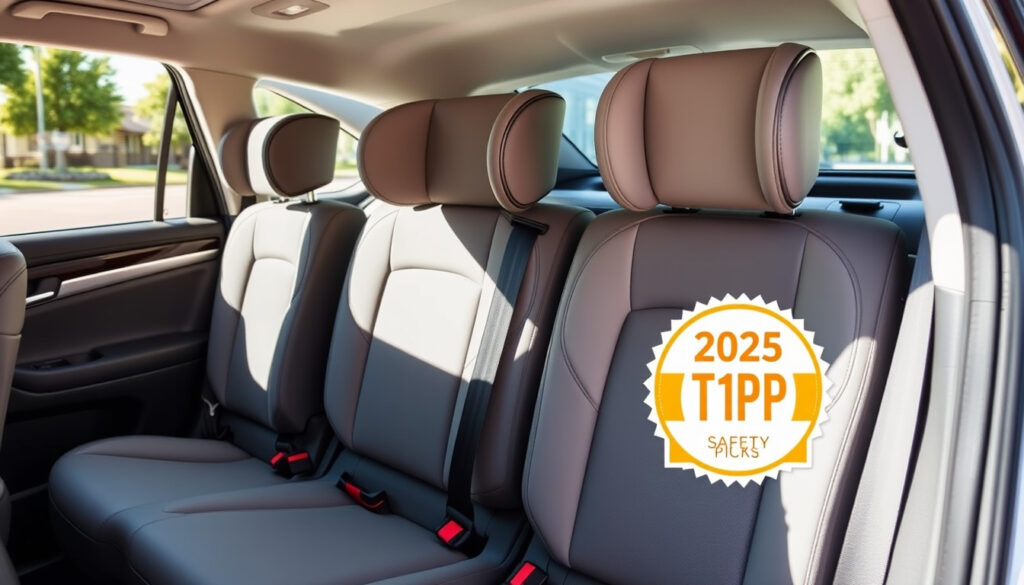
High Back Booster Seat – 2025 Best Picks and Safety Guide
A high back booster seat is a child vehicle restraint designed to position the adult seat belt correctly across a child’s body once they have outgrown a harnessed car seat. Unlike forward-facing seats with built-in harnesses, these boosters rely on the vehicle’s own lap-and-shoulder belt — the full backrest and adjustable headrest wings work together to route the shoulder belt across the chest and the lap belt low across the hips, where it belongs.
For children typically between 40 and 100–110 pounds, the high back design provides head and neck support that is particularly critical in vehicles whose rear seats lack built-in head restraints. According to Consumer Reports, the high back configuration is recommended as the first booster stage before any transition to a backless model.
Reviews from BabyGearLab, the Insurance Institute for Highway Safety (IIHS), and Consumer Reports consistently place models like the Nuna AACE and the Chicco KidFit Zip Air Plus 2-in-1 at the top of the category for crash sensor performance, ease of use, and overall value in 2024–2025 testing cycles.
What Is a High Back Booster Seat and Who Needs One?
A booster seat with a full backrest that guides the vehicle seat belt over a child’s body correctly — for children generally weighing 40 to 100+ lbs who have outgrown a forward-facing harness.
Most children use a high back booster between ages 4 and 10, after transitioning from a forward-facing harnessed seat and before the adult seat belt fits independently.
Seat belt routing guides, side-impact protection wings, adjustable headrests, and — on many models — the ability to convert to a backless booster for occasional use.
Budget-friendly options start around $50. Premium models such as the Nuna AACE reach the $150–$250 range depending on retailer and configuration.
- High back boosters are appropriate once a child outgrows a forward-facing harness — usually at 40+ lbs and 40–49 inches tall.
- The backrest is essential in vehicles where rear seats have no integrated head restraints.
- Side-impact bolsters on the headrest wings offer lateral protection not present in any backless design.
- The American Academy of Pediatrics (AAP) recommends starting with a high back booster before moving to a backless model.
- Children should remain in a booster of any type until they reach approximately 4’9″ (57 inches) and the adult seat belt fits correctly without assistance.
- According to IIHS 2024 testing, 47 of 54 newly evaluated boosters earned a “Best Bet” rating for optimal belt fit.
- Crash test sensor data — measuring peak forces on the head and chest — is the primary metric used by independent labs such as BabyGearLab to rank booster seat models.
| Fact | Details | Source |
|---|---|---|
| Minimum weight for use | 40 lbs | Manufacturer standards / NHTSA guidance |
| Maximum weight (typical range) | 100–110 lbs, varies by model | BabyGearLab / Consumer Reports |
| Height range | 43–57 inches (approx.) | Manufacturer averages |
| Typical age of use | 4–10 / 12 years | AAP recommendation |
| Federal safety standard | FMVSS 213 | Federal regulation |
| IIHS “Best Bet” boosters (2024) | 47 out of 54 models tested | IIHS |
| Transition trigger from harness seat | Child exceeds harness limits (~40–65 lbs / 40–49 in.) | AAP / BabyGearLab |
| Exit trigger from booster | Child reaches ~4’9″ or adult belt fits correctly unaided | NHTSA / AAP |
| Common installation methods | Rigid LATCH, ClickTight (Britax), vehicle seat belt | BabyGearLab |
| Estimated price range | ~$50–$250 | Retail estimates |
High Back Booster vs. Backless: Which Offers Better Protection?
Structural Differences Between the Two Designs
The core distinction lies in what each seat provides beyond the vehicle belt itself. A high back booster includes a full backrest and headrest wings that support the child’s head, neck, and torso, and route the shoulder belt away from the neck. A backless booster is a simple cushion that elevates the child and guides the lap belt — nothing more.
Consumer Reports notes that a high back booster is essential when the vehicle’s rear seat lacks built-in head restraints. Without a headrest positioned behind the child, an unrestrained head in a side or rear collision absorbs far greater forces. The side-impact bolsters integrated into most high back designs provide an additional layer of lateral protection that backless models cannot replicate.
When Each Type Makes Sense
For daily use — school runs, regular commuting — the high back configuration is the preferred choice according to both Consumer Reports and the IIHS. Backless boosters, being lighter and more portable, are better suited for occasional use in a second vehicle or for travel. Many leading high back models — including the Chicco KidFit and Graco TurboBooster lines — convert to backless, making them versatile long-term investments.
Weight differences matter in practice. The Chicco KidFit Zip Air Plus weighs approximately 11.8 lbs in full high back configuration, while the Britax Grow with You ClickTight sits at over 26 lbs — at the heavy end of the high back spectrum according to BabyGearLab’s comparative data.
High back boosters provide side-impact bolsters built into the headrest wings. Backless designs lack this feature entirely. Consumer Reports and the IIHS both recommend the high back stage first, particularly in vehicles without rear integrated head restraints.
Both the IIHS and the AAP emphasize that correct seat belt positioning is the most critical factor in booster safety. The shoulder belt must cross mid-chest and the lap belt must sit low across the hips — not the abdomen. A booster that achieves this consistently earns “Best Bet” status from the IIHS regardless of whether it has a back or not.
Are High Back Boosters Definitively Safer?
The IIHS states that high back boosters generally offer superior head and neck support compared to backless models, especially in vehicles lacking rear head restraints. However, when a vehicle seat provides adequate integrated head support, a well-rated backless booster can deliver equivalent belt positioning performance. The IIHS 2024 data shows high back models dominating the “Best Bet” category, with models like the Chicco KidFit Zip Air Plus earning the designation in both high back and backless configurations.
Best High Back Booster Seats for 2024–2025
Independent testing from BabyGearLab, Consumer Reports, and the IIHS forms the basis of the rankings below. BabyGearLab specifically prioritizes crash sensor data — measuring peak forces on the head and chest — over padding or cosmetic features when assigning its overall scores.
| Model | Weight / Height Limits | Key Advantages | Notable Drawbacks | IIHS / Crash Rating | Approx. Price Tier |
|---|---|---|---|---|---|
| Nuna AACE — Best Overall | 40–110 lbs | Top crash sensor scores, rigid LATCH, reclines, nap-friendly headrest | Limited padding; heavy at 15.9 lbs | Top crash analysis (BabyGearLab) | Higher-end |
| Chicco KidFit Zip Air Plus 2-in-1 — Best Budget High-Back | 40–100 lbs | Strong crash results, lightweight (11.8 lbs), zip-off cover, leg support, converts to backless | Headrest fabric can be uncomfortable | IIHS Best Bet (both modes) | Budget-friendly |
| Chicco KidFit ClearTex Plus 2-in-1 | 40–100 lbs | Lightest in class at 10.3 lbs; strong value proposition | Below-average crash sensor performance | Not ranked as top tier (BabyGearLab) | Under ~$50 range |
| Graco TurboBooster LX | High-back to backless (specific limits not published in test results) | Slim profile, lightweight, easy conversion between modes | Less padding than premium alternatives | IIHS Best Bet (backless); high back variants strong | Affordable |
| Britax Grow with You ClickTight | Converts high-back to backless | Proprietary ClickTight belt-path installation; highly adjustable | Heavy at 26+ lbs compared to competitors | IIHS Best Bet (Highpoint / Skyline variants) | Mid-to-high range |
| Evenflo All4One DLX | Varies by configuration | Versatile multi-stage design | — | IIHS Good Bet (high back) | Mid range |
| Peg Perego Viaggio Flex / Shuttle | Not specified in available test data | Strong head and chest sensor scores | — | Above average (BabyGearLab) | Higher-end |
| Graco Affirm | Part of Graco high-back lineup | Strong IIHS performance across the Graco range | Model-specific details limited in published test data | Related Graco models IIHS Best Bet | Affordable |
Other models noted in testing include the Diono Monterey 2XT, the Graco 4Ever DLX (a multi-stage seat earning Best Bet in backless mode), and the Clek Oobr — though BabyGearLab flags the Clek as less comfortable than top-rated alternatives. Car and Driver’s independently tested picks overlap significantly with IIHS and BabyGearLab findings, as documented in Car and Driver’s car seat review.
Leading Brands and Their Distinct Strengths
Chicco leads for value and comfort, with the KidFit line delivering competitive crash scores at accessible prices. Graco dominates the affordable segment, with multiple models earning IIHS Best Bet designations. Nuna occupies the premium safety tier, the AACE earning the highest crash sensor marks in BabyGearLab’s analysis. Britax is recognized for its ClickTight installation system. Peg Perego and Evenflo post solid crash numbers without reaching the very top of independent rankings.
No active recalls were identified for the models listed above in 2024–2025 review cycles, but past Graco and Chicco histories include minor, subsequently resolved issues. Current recall status should always be confirmed at the NHTSA car seat recall database before purchase or continued use.
How to Install and Use a High Back Booster Seat Correctly
Installation Methods Compared
Most high back boosters secure to the vehicle using one of three approaches. Rigid LATCH connectors — as found on the Nuna AACE — clip directly to the vehicle’s anchor points and hold the unoccupied seat firmly in place. Britax’s ClickTight system threads the vehicle seat belt through an internal belt path, locking with an audible click for a secure, repeatable fit. Standard seat belt installation, used by the majority of budget models, relies on the lap-and-shoulder belt itself to hold the booster in position when the child is buckled in.
BabyGearLab rates the Chicco KidFit and Nuna AACE among the easiest top performers to install correctly. A step-by-step video comparison of leading 2024 booster models illustrates installation differences across key seats in real vehicle environments. For Canadian parents looking to compare physical seat dimensions at a retail location, tools like Princess Auto Near Me can help identify nearby stores that carry child safety and automotive products.
Correct Belt Positioning for the Child
Once seated, the shoulder belt must cross the mid-chest — not the neck or face. The lap belt must sit low and flat across the upper thighs and hips, never across the soft abdomen. The booster’s built-in belt guides route the belt to these positions automatically when the seat is correctly sized for the child.
A child has outgrown the high back configuration when their ears reach the top of the headrest wings or when their shoulders exceed the seat’s upper belt guide. At that point, a backless booster — or direct seat belt use once the child reaches approximately 57 inches — becomes appropriate.
Legal Requirements and Jurisdiction Variations
Federal NHTSA guidance and the AAP state that children should remain in booster seats until the adult seat belt fits them properly without elevation, generally around 4’9″ tall. Individual U.S. state laws vary and may specify age or weight thresholds rather than height-based criteria. Canada and other jurisdictions have distinct provincial or national regulations. The AAP’s official car seat guidance at HealthyChildren.org provides current recommendations on transitioning between seat types based on physical development rather than age alone.
The Car Seat Progression: Where High Back Boosters Fit in the Sequence
- Birth to approximately 2 years: Rear-facing infant or convertible car seat. Children should remain rear-facing as long as possible within the seat’s published weight and height limits.
- Approximately 2–4 years, or until harness limits are reached: Forward-facing car seat with a built-in harness, typically rated to 40–65 lbs depending on the specific model.
- Approximately 4–7 years (40–100 lbs, 43–57 inches): High back booster seat. The transition occurs when the child exceeds the forward-facing harness limits — generally around 40 lbs and 40–49 inches. The AAP recommends the high back stage before any move to a backless design.
- Approximately 7–12 years: Backless booster, used until the adult seat belt fits the child correctly without elevation assistance.
- When the child reaches approximately 4’9″ (57 inches): The adult lap-and-shoulder belt fits correctly without a booster — shoulder strap across mid-chest, lap belt low across the hips — and booster use is no longer required.
These age ranges are approximate. Both the AAP and NHTSA emphasize that physical fit — not a specific birthday — determines when a child is ready to advance to the next stage.
What Is Established and What Remains Variable in High Back Booster Safety
| What Is Established | What Remains Uncertain or Variable |
|---|---|
| All boosters sold in the U.S. must meet the FMVSS 213 federal safety standard | State-specific legal age, weight, and height thresholds vary considerably across jurisdictions |
| IIHS tested 54 new boosters in 2024; 47 earned “Best Bet” for optimal belt fit | Belt fit performance varies by vehicle model and individual child body shape |
| Nuna AACE and Chicco KidFit Zip Air Plus post top crash sensor scores (BabyGearLab) | Crash sensor rankings are protocol-specific; real-world outcomes involve additional variables |
| High back design is essential in vehicles without rear head restraints (Consumer Reports, IIHS) | In vehicles with tall integrated rear head restraints, a well-rated backless may provide equivalent belt guidance |
| No active recalls were identified for top-listed models in 2024–2025 review cycles | Recall status can change at any time; NHTSA.gov is the authoritative, current source |
| Children should remain in boosters until the seat belt fits correctly without assistance, around 4’9″ | The exact age at which a child reaches this milestone varies significantly by individual growth rate |
Why High Back Boosters Exist: Safety Background and Industry Context
Booster seats as a category address a specific vulnerability: children too large for a harness but too small for an adult seat belt. Without a booster, the shoulder belt typically crosses the child’s neck rather than the chest, and the lap belt rides across the soft abdomen rather than the bony pelvic structure — both conditions that substantially increase injury risk in a crash event. The high back booster resolves this more completely than a backless design by also supporting the head and neck in side-impact scenarios.
Modern high back seats integrate side-impact tested headrest wings designed to absorb and redirect lateral forces. The IIHS introduced its booster rating program specifically to identify which models consistently position the belt correctly across the widest range of children and vehicle combinations — a real-world metric that crash sensor data alone cannot fully capture. The program’s 2024 results, showing 47 of 54 new boosters earning Best Bet status, reflect significant improvement across the market compared to earlier testing cycles.
The growth of multi-stage seats — such as the Graco 4Ever DLX, which spans rear-facing through backless booster — reflects industry movement toward products covering a child’s full developmental arc in a single purchase. However, independent reviewers including BabyGearLab note that purpose-built high back boosters often outperform all-in-one seats on the specific metrics most relevant at the booster stage: crash sensor readings and belt positioning accuracy.
What Independent Testing Organizations and Reviewers Report
“Most new boosters earn highest IIHS rating — 47 of 54 models evaluated in the latest testing cycle received Best Bet status for optimal seat belt fit across child and vehicle combinations.”
— Insurance Institute for Highway Safety (IIHS), 2024 booster evaluation
“High back booster seats are recommended as the first booster step for children transitioning out of a harnessed forward-facing seat. The backrest provides head and neck support that is critical in vehicles without rear head restraints.”
— Consumer Reports, booster seat buying guide
“BabyGearLab prioritizes crash sensor data measuring forces on the head and chest above all other metrics when ranking booster seats. Padding and aesthetics are secondary to what the sensors reveal about protection levels.”
— BabyGearLab, best booster seat analysis
The IIHS program evaluates belt fit using child surrogates across multiple seat positions and vehicle types, making its Best Bet designation one of the most practically useful safety indicators available to consumers. BabyGearLab’s crash sensor methodology provides a complementary data layer, identifying which seats minimize peak collision forces — the two approaches together offer the most complete picture of real-world booster performance.
Summary: Choosing the Right High Back Booster for Your Child
A high back booster seat is the appropriate next step after a child outgrows a forward-facing harnessed seat — typically around 40 lbs and between ages 4 and 7. The Nuna AACE leads independent crash testing for 2024–2025, while the Chicco KidFit Zip Air Plus 2-in-1 offers the strongest combination of IIHS ratings and accessible pricing. Graco and Britax fill the reliable mid-range, both brands earning multiple Best Bet designations. Parents should verify current recall status through NHTSA and confirm that the chosen seat achieves correct belt positioning for their specific child in their specific vehicle. Just as selecting the right home fixture — such as a Bathroom Vanity with Sink — depends on dimensions and fit within a specific space, the best booster is always the one that fits the child correctly and is used consistently on every trip.
Frequently Asked Questions About High Back Booster Seats
Can a high back booster seat be used in any vehicle?
Most high back boosters work in standard passenger vehicles, but belt fit varies by vehicle seat geometry. The IIHS tests boosters across multiple vehicle types. Always confirm the shoulder belt crosses mid-chest and the lap belt sits low on the hips in your specific vehicle before relying on the seat for regular use.
What should I do if my child is between the harness limit and booster minimum?
Children should remain in a forward-facing harnessed seat until they genuinely exceed the manufacturer’s upper weight or height limit for the harness. The transition to a high back booster should be based on actually outgrowing the harness — not on age or a desire to move up a stage early.
Do high back booster seats have an expiration date?
Yes. Most car seats, including booster seats, carry a printed expiration date — commonly 6 to 10 years from the manufacture date — found on a label on the seat itself. Materials degrade over time and safety standards evolve. A seat past its expiration date should not be used.
Is rigid LATCH required for a high back booster to be safe?
No. Rigid LATCH — as found on the Nuna AACE — stabilizes the unoccupied seat and is a convenience and anti-tip feature. It is not universally required. Many top-rated models use standard seat belt installation. The critical factor is correct belt positioning when the child is buckled in and seated.
When is the right time to move from a high back booster to a backless model?
The transition is appropriate when the child’s ears reach the top of the high back headrest or their shoulders exceed the seat’s upper belt guide slots. The AAP recommends remaining in the high back stage longer rather than moving to backless prematurely — particularly in vehicles without rear head restraints.
How do I check whether a specific booster seat has been recalled?
NHTSA maintains a continuously updated recall database at NHTSA.gov. No active recalls were identified for the primary models in this review for the 2024–2025 period, but status can change. Registering the seat with the manufacturer ensures direct notification of any future safety actions.
Is the Chicco KidFit Zip Air Plus worth the extra cost over the ClearTex Plus?
BabyGearLab’s crash sensor testing suggests yes for most buyers. The Zip Air Plus delivers better crash sensor scores and earns IIHS Best Bet in both high back and backless configurations. The ClearTex Plus is lighter at 10.3 lbs but posts below-average crash results in the same independent testing framework.
Can a child use a high back booster in the front seat?
Major safety organizations including the AAP and NHTSA recommend that all children under 13 ride in the rear seat whenever possible. If a rear seat is unavailable and a child must use the front seat, the booster must be used with an active airbag — but rear placement remains the safety standard.
More related posts
 Bar Stool Bar Ireland: Buying Guide & Best Retailers 2025
 Tom Blyth Biography: Age, Relationship, and Ethnicity
 Phil Robertson: What Happened to the Duck Dynasty Star
 Who Is Justin Trudeau Dating Now? Katy Perry Rumors
 Stephanie Niznik: Everwood Actress, Cause of Death, and Net Worth
 Diana Ross: Children, Marriages, Age, Net Worth 2025
 Bank of Canada Interest Rate Announcement: 2.25% Hold
 Best Playa del Carmen All Inclusive Resorts: Top Picks