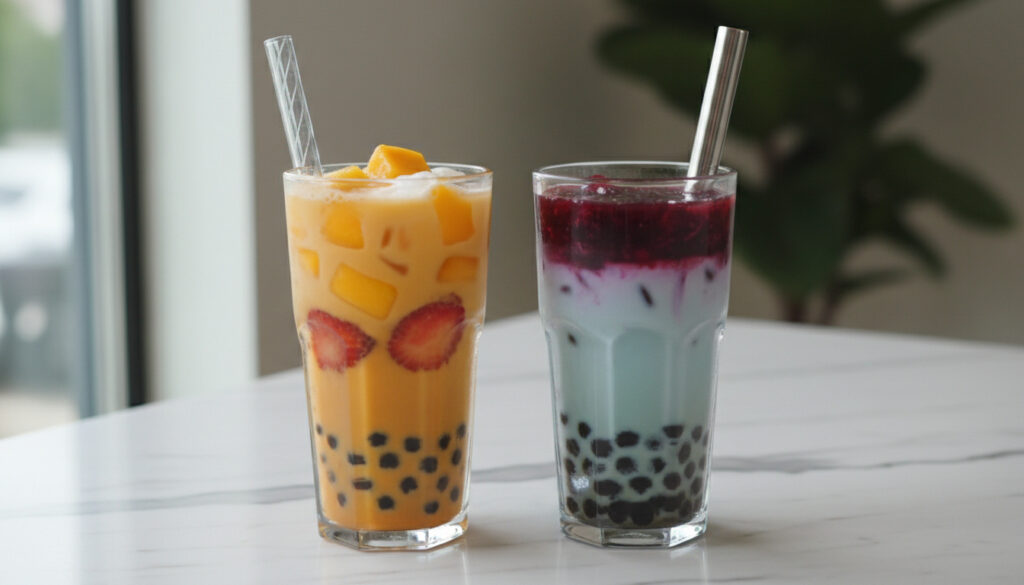
Real Fruit Bubble Tea – Fresh Pulp vs Syrup Versions
Real fruit bubble tea represents a sharp departure from conventional boba drinks. Instead of relying on artificial syrups or colored powders, this variation blends fresh fruit pulp, natural juices, or pureed whole fruits directly into brewed tea bases, creating distinctive textures that processed concentrates cannot replicate.
The distinction matters for consumers seeking authenticity. Traditional bubble tea emerged in 1980s Taiwan as a simple mixture of tea, milk, and chewy tapioca pearls, often enhanced with artificial flavorings. Modern interpretations now incorporate mango, strawberry, passion fruit, and other seasonal produce, offering nutritional components absent from synthetic alternatives.
This examination traces the composition, nutritional implications, and preparation methods of genuine fruit-based boba, alongside the brands leading this natural ingredient movement.
What Is Real Fruit Bubble Tea?
Bubble tea with fresh fruit pulp versus artificial syrup bases
Natural flavors, vitamin content, and reduced artificial additives
Real Fruit Bubble Tea, Sharetea, Kung Fu Tea, Chatime
Use mango or strawberry pulp with properly cooked tapioca pearls
- Authentic versions utilize actual fresh fruits, juices, or pulp rather than artificial flavoring agents
- The beverage originated in Taiwan during the 1980s as a tea-based drink with tapioca pearls
- Fresh pulp provides natural vitamin C and dietary fiber absent from syrup formulations
- Visible fruit particles create a chunky texture distinct from homogeneous artificial mixes
- Preparations typically avoid the preservatives and synthetic colorants found in concentrate-based drinks
- Wide-diameter straws accommodate both fruit pulp and traditional pearls simultaneously
- Specialized chains now emphasize handcrafted drinks without artificial preservatives
| Aspect | Real Fruit Version | Syrup-Based Version |
|---|---|---|
| Flavor Source | Fresh fruit, juice, or pulp | Artificial syrups or powders |
| Preservative Content | No artificial preservatives | Chemical stabilizers typical |
| Vitamin Content | Natural vitamins C and fiber | None added |
| Texture | Chunky with visible pulp | Smooth, uniform liquid |
| Color Source | Natural fruit pigments | Synthetic dyes |
| Taste Profile | Fresh, tangy, bright | Sweet, processed aftertaste |
| Preparation Method | Blended fresh per order | Pre-made concentrates mixed |
| Cost Positioning | Premium pricing reflects ingredients | Budget-friendly |
The contrast extends beyond ingredients to the fundamental drinking experience. While syrup versions rely on flavored concentrates for consistency and cost efficiency, authentic fruit variations deliver flavor profiles that shift with seasonal produce availability, as documented by tea industry historians and bubble tea specialists.
Is Real Fruit Bubble Tea Healthier?
Nutritional Advantages of Fresh Pulp
Fresh fruit contributions provide measurable nutritional value. Mango and strawberry bases deliver natural vitamin C, while the inclusion of actual pulp adds dietary fiber impossible to replicate with artificial flavoring agents. These elements align with broader dietary recommendations for whole food consumption, avoiding the artificial additives present in concentrate-based alternatives.
However, the presence of fruit does not automatically classify the beverage as low-calorie. Standard bubble tea servings typically contain 300 to 500 or more calories depending on size and topping selections, driven primarily by sweeteners and tapioca starch content. The fruit component modifies but does not eliminate these baseline nutritional considerations.
While real fruit provides genuine vitamins and fiber, total calorie and sugar content varies significantly by preparation method and specific brand formulations. Consumers should verify individual nutritional information where available.
Sugar and Ingredient Transparency
Authentic fruit preparations eliminate artificial preservatives and synthetic colorants, addressing consumer demand for cleaner ingredient lists. This transparency appeals to those monitoring additive intake, though the beverages still contain natural sugars from fruit and added sweeteners. The health trajectory depends entirely on specific preparation choices, including milk selection and sweetener quantity, factors that remain inconsistent across commercial establishments.
Which Brands Offer Real Fruit Bubble Tea?
Specialized Chains
Real Fruit Bubble Tea operates as a dedicated concept, offering more than fifty handcrafted drinks emphasizing fresh fruits, brewed teas, and preservative-free preparations. The brand maintains a mobile application for ordering and loyalty rewards, with store locations accessible through their proprietary platform, as detailed on their corporate website and the iOS application store.
Mainstream Availability
Major chains including Gong Cha, Sharetea, Kung Fu Tea, and Chatime provide fresh fruit tea options, though these represent menu categories rather than exclusive brand identities. Availability varies by location and season, with individual franchises determining specific fruit sourcing practices. Consumers seeking guaranteed fresh fruit preparation should inquire directly with specific locations regarding current ingredient protocols, as operational standards differ across regional markets.
Locating authentic preparations requires specific local search strategies, similar to finding specialized retail services like Stationery Store Near Me – Best LA Shops Open Now, where proximity and current inventory determine immediate availability.
How to Make Real Fruit Bubble Tea at Home
Essential Components
Preparation requires brewed tea (typically black, green, or oolong), fresh fruit for pureeing, optional milk or non-dairy alternatives, and tapioca pearls manufactured from cassava starch. Popping boba—spheres created with seaweed extract containing fruit juice—offers an alternative topping that bursts upon chewing, distinct from the chewy texture of traditional pearls.
Execution Method
Brew tea to preferred strength and cool completely. Blend fresh fruit into a smooth puree, straining if desired, though pulp retention defines authentic texture. Combine tea, fruit mixture, and milk in a shaker with ice, agitating vigorously to create froth. Add cooked tapioca pearls to the serving cup, pour the shaken mixture over them, and serve immediately with a wide-gauge straw capable of accommodating both liquid and solids.
Cook tapioca pearls until floating and translucent, then rinse immediately under cold water to prevent clumping. This maintains the distinct chewy texture essential to authentic boba.
Fat straws piercing sealed cups accommodate both fruit pulp and tapioca pearls simultaneously, a mechanical necessity for consuming this textured beverage properly.
How Has Real Fruit Bubble Tea Evolved?
-
Bubble tea originates in Taiwan as a tea-based drink mixed with milk and tapioca pearls.
Source: Wikipedia
-
The beverage spreads throughout East Asia, initially relying on basic syrup flavorings for consistency.
-
Western markets embrace bubble tea, with artificial syrup versions dominating for supply chain efficiency.
-
Health consciousness drives demand for fresh fruit pulp options, prompting chains to emphasize natural ingredients.
-
Premium chains expand real fruit pulp programs, while “boozy boba” variations incorporating alcohol emerge in specialty markets.
What Is Established Versus Uncertain?
| Established Information | Information Requiring Clarity |
|---|---|
| Real fruit contains natural vitamins (C) and dietary fiber | Exact calorie counts per specific brand recipes |
| Bubble tea originated in Taiwan during the 1980s | Standardized definitions for “real fruit” labeling across chains |
| Fresh pulp creates distinct chunky texture | Long-term health impacts of daily consumption patterns |
| Authentic preparations avoid artificial preservatives | Specific sugar content variations by individual shop location |
Why Are Consumers Shifting Toward Natural Ingredients?
The market trajectory reflects broader dietary movements away from processed foods toward visible, identifiable ingredients. As beverage competition intensifies with specialty juice bars and smoothie concepts, bubble tea establishments differentiate through transparency—allowing customers to observe actual fruit blending rather than pumping syrup from bulk containers.
This shift also connects to localized shopping behaviors. Just as consumers seek specific nearby goods and services, evidenced by searches for Stationery Store Near Me – Best LA Shops Open Now, boba enthusiasts increasingly prioritize knowing exactly which physical locations offer genuinely fresh preparation methods versus those relying on concentrates.
Premium positioning further drives the trend, with consumers demonstrating willingness to pay higher prices for beverages they perceive as closer to whole food categories, despite the continued presence of sweeteners and starch-based toppings that complicate pure health categorizations.
What Do Sources Confirm About This Beverage?
Bubble tea originated in Taiwan in the 1980s as a tea-based drink (often black, green, or oolong) mixed with milk, sweeteners, and chewy tapioca pearls at the bottom, sometimes flavored artificially.
— Encyclopedic documentation
Real fruit/pulp boba incorporates fresh fruits, juices, or pulp for natural flavor and texture, often without preservatives; examples include mango, strawberry, or passion fruit blended directly.
— Tea industry analysis
Traditional boba tea is high in sugar and calories from sweeteners and pearls, often ranging 300-500+ per serving based on size and toppings.
— Beverage specialist documentation
What Should You Consider When Ordering?
Selecting between real fruit and syrup-based bubble tea ultimately depends on prioritizing natural ingredient transparency against cost and consistency preferences. Real fruit delivers authentic vitamin content and textural complexity but commands premium pricing and immediate consumption timelines. For those researching preparation methods or nutritional specifics, additional technical information appears in Real Fruit Bubble Tea – Authentic Recipes and Health Benefits.
Frequently Asked Questions
What fruits work best for real fruit bubble tea?
Mango, strawberry, passion fruit, and peach provide optimal texture and natural sweetness without overwhelming the tea base, according to standard preparation methods.
How long does real fruit bubble tea last?
Consume immediately after preparation. Fresh pulp oxidizes within hours, and dairy components degrade rapidly at room temperature.
Can I use frozen fruit for homemade boba?
Yes, thawed frozen mango or strawberries substitute adequately for fresh, though final texture may vary slightly.
Does Gong Cha use real fruit?
Gong Cha offers fresh fruit tea options, though specific availability depends on individual location and seasonal sourcing.
What is the difference between pulp and popping boba?
Pulp consists of blended fruit fibers, while popping boba are juice-filled spheres made with seaweed extract designed to burst when compressed.
Is real fruit bubble tea lower in calories?
Not necessarily. While avoiding artificial syrups, the beverage retains natural fruit sugars, added sweeteners, and calorie-dense tapioca pearls.
More related posts
 Stockton Rush: Life, Titan Implosion, and Legacy
 FC Barcelona vs Borussia Dortmund Timeline & Head-to-Head
 104 F to C – Exactly 40 Degrees Celsius
 Mae Martin: Gender, Diagnoses, Relationships, and Wayward Character Explained
 Xavier Dolan: Retirement, Return, and Career Arc
 George Orwell: The Man Behind 1984 and Animal Farm
 Taylor Hill Biography: Husband, Career, Short Hair & More
 Canada Carbon Rebate 2026: Program End & Small Business Info